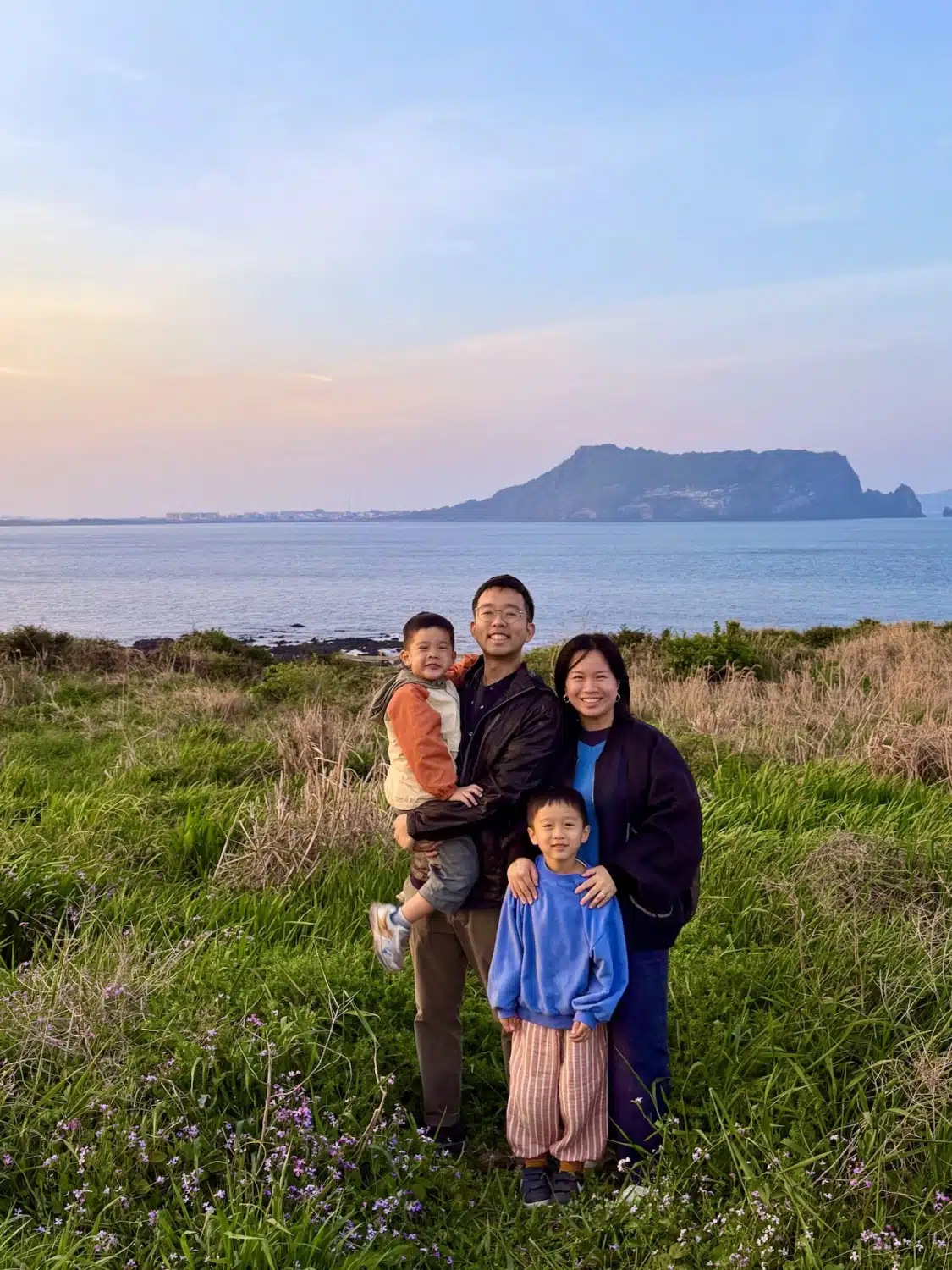
For the longest time, I thought Jeju was a sleepy (read: boring) island.
Then the K-dramas did their thing. Seen enough scenes from Welcome to Samdal-ri and Our Blues to shift the impression, plus there was a growing chorus of friends raving about design-forward cafes, gorgeous B&Bs, and a paradox that kept coming up: super chill, yet somehow, an abundance of activities.
In late March 2026, our family finally made our way to the island of tangerines. And boy, did we love it.
We spent 6 days and 5 nights in Jeju, tacked onto a 3-night stay in Seoul. It felt like the right amount of time — enough to slow down, cover ground, and not feel rushed. If you’re planning your own trip, I’d call 4 nights the minimum. Any less and you’re just scratching the surface.
- Day 1 – Arriving in Jeju
- Day 2 – Explorations in Aewol and central Jeju
- Day 3 – South and central Jeju: Dolphin watching, strawberry picking, Osulloc & Innisfree
- Day 4 – East Jeju: Snoopy Garden, Gimnyeong Maze and Seopjikoji
- Day 5 – East and South Jeju: Boromwat, Daepo Jusangjeolli Cliff, Jeju Stadium
- Day 6 – Goodbye Jeju: Figure Museum and Father’s Garden
Day 1 – Arriving in Jeju
Our first impression of Jeju was awe – as we prepared to touchdown, it was hard to miss the massive volcano Hallasan dominating the centre of the island. While doing my research, I couldn’t wrap my head around why a hike to the summit and back could take 9 hours! Now I knew why.
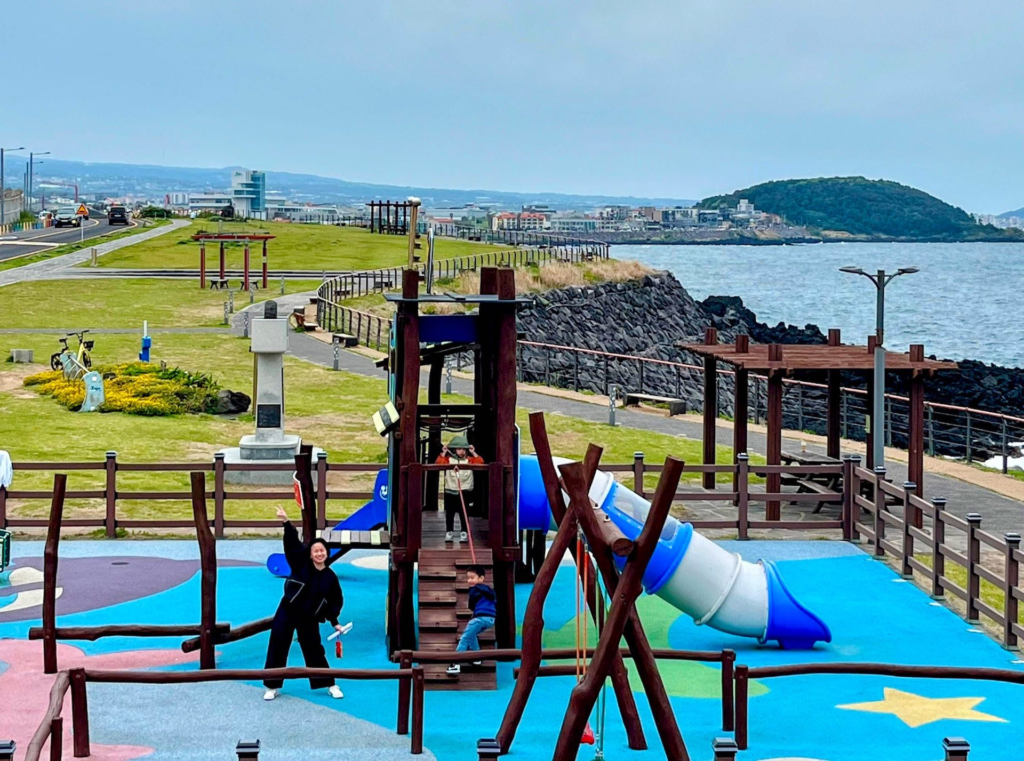
Our first day was really chill. After we collected our car, we passed by a police-themed playground at Eoyeong Park (Yongdam 3-dong, Jeju City) that overlooks the sea. I couldn’t help but sit on the swings myself, pretending to hurl myself into the gorgeous blue seas.
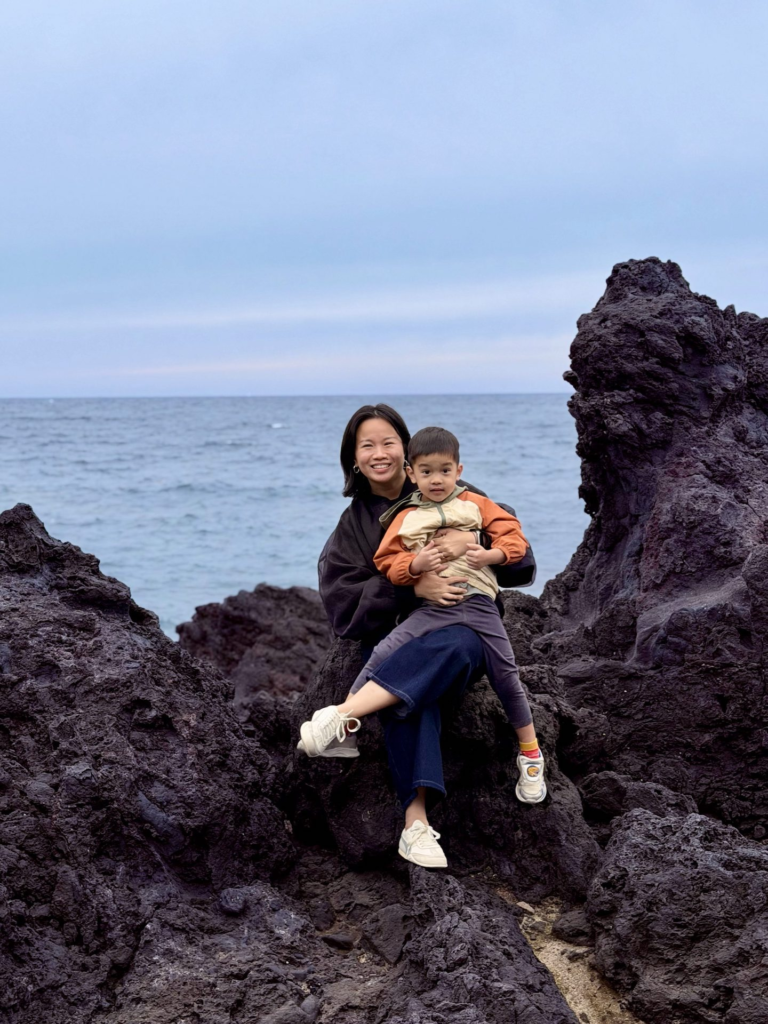
Jeju’s iconic, porous basalt make great platforms for photos. Wear covered shoes.
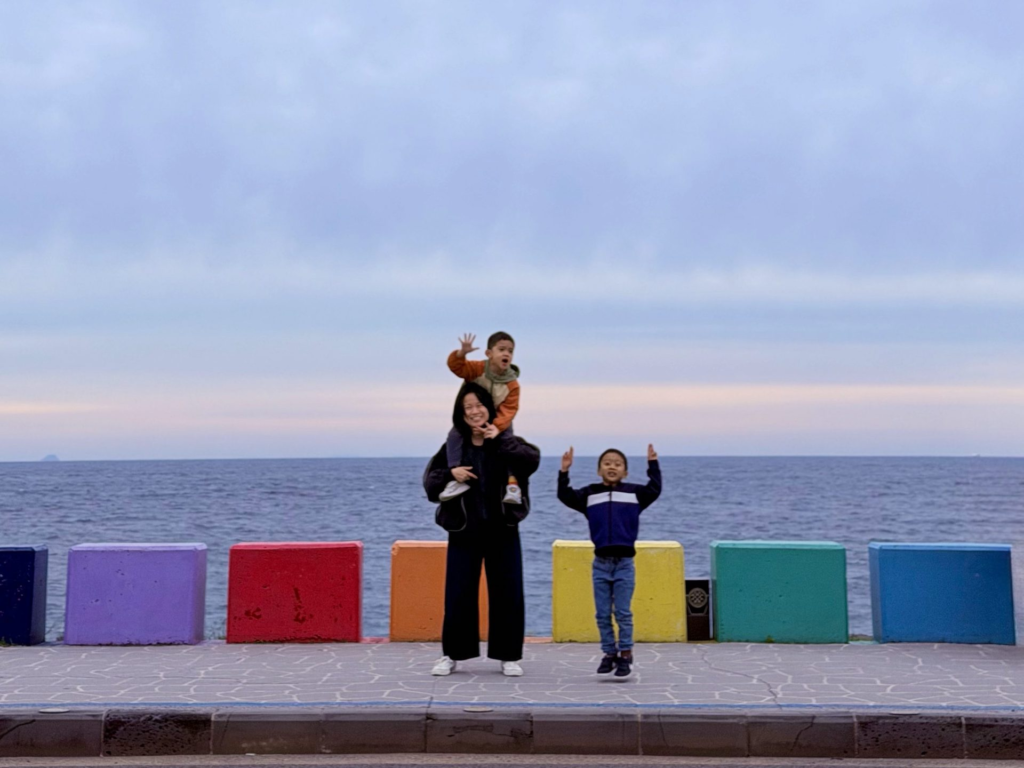
En route to dinner, we stopped by the Dodudong Rainbow Coastal Road for some photos. It won’t take more than 10 minutes if all you’re grabbing is a photo, but we dwelled longer cos the kids were enthralled by their newfound mini obstacle course.
We eventually made our way to EQ Table BBQ, which offers Jeju’s famous black pork for a DIY BBQ inside individual glamping huts. If you’ve watched enough K-dramas, you’ll recognise the scene immediately — the one where the stressed Seoul lead escapes to the countryside and ends up at exactly this kind of BBQ. We also went during a cold snap, which made the grill and outdoor bonfire a welcome necessity.
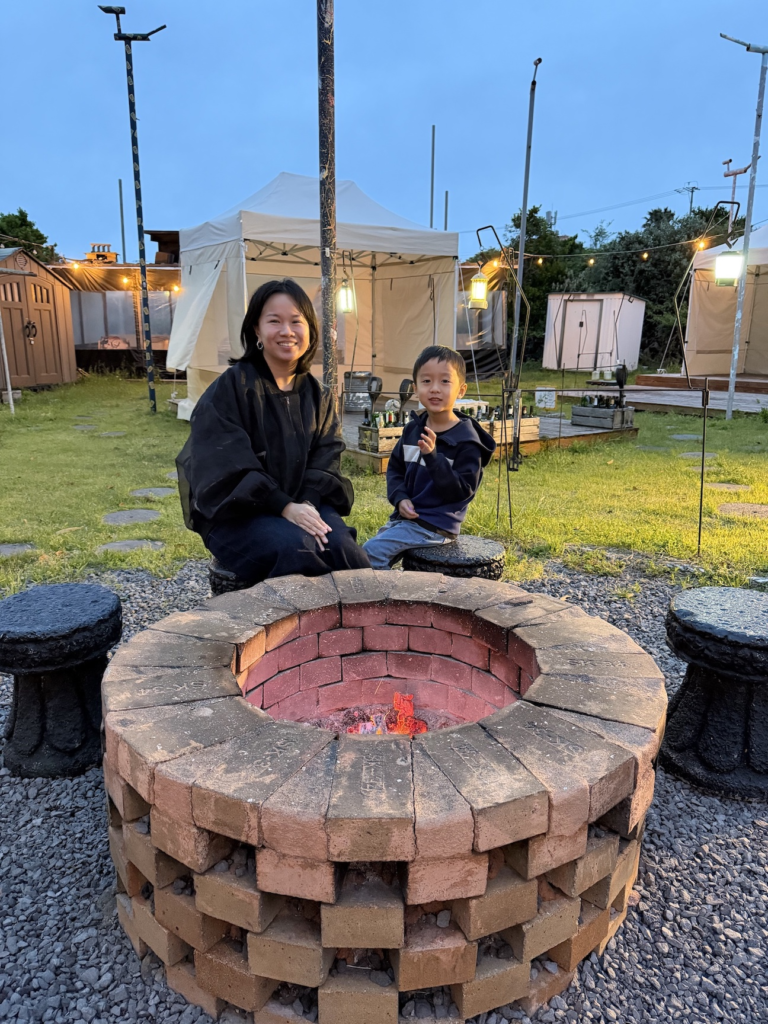
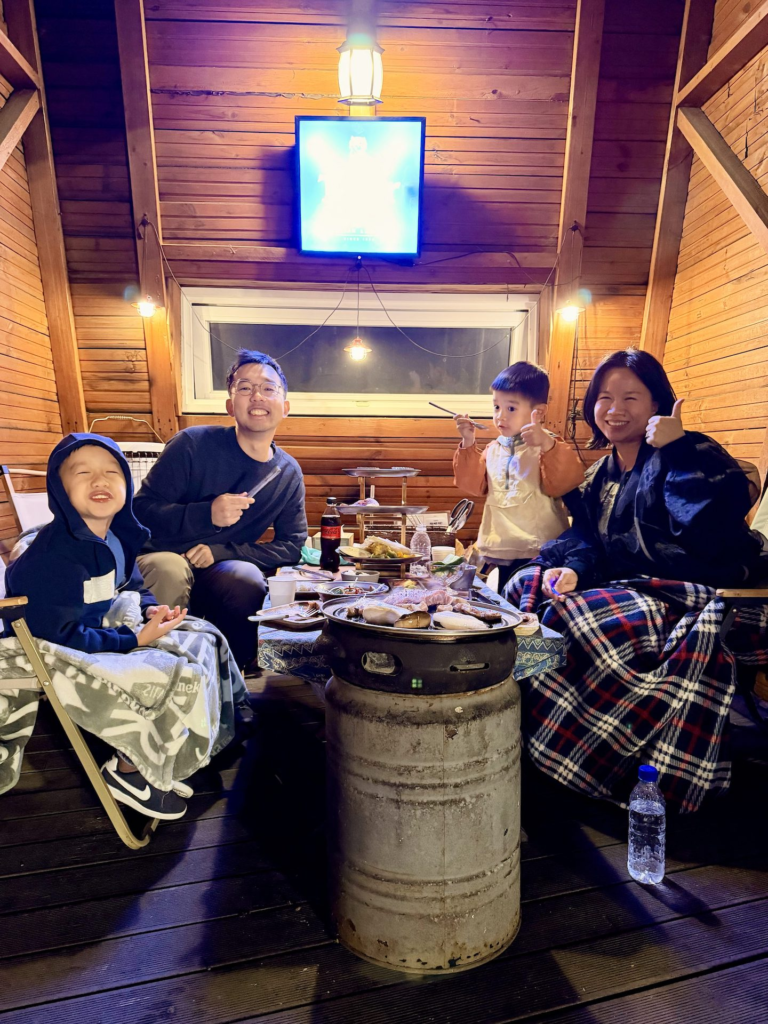
You will need to speak Korean (or use a translator app) to order your food, and it is extremely no-frills (it is a DIY BBQ after all), but we loved the experience.
Since we wanted to explore all that Jeju had to offer, we made the decision to stay in three different locations. For our first two nights, we stayed in Atarak in the Aewol (northwestern) area.
Day 2 – Explorations in Aewol and central Jeju
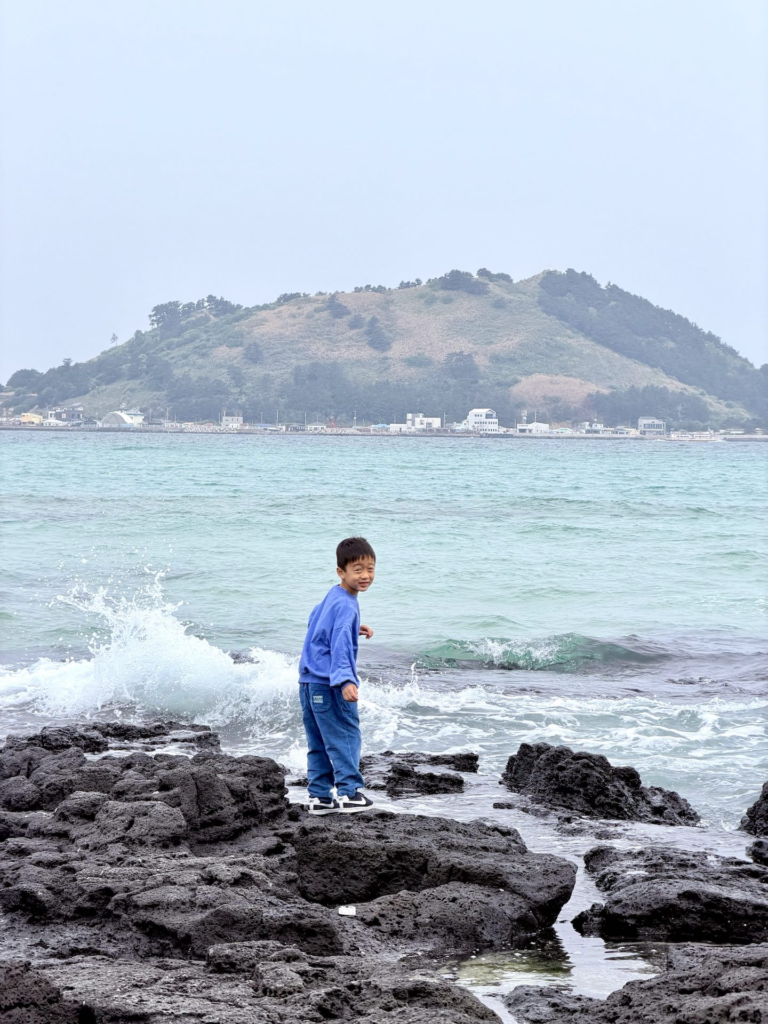
We began our morning chilling at Hyeopjae Beach, which our hotel opened up to.
I loved how turquoise the seas were, and the boys picked up shells for a good 30 mins. (My older boy gave out the shells to his friends as souvenirs, which I found adorable – we washed them beforehand of course.)
We had friends to meet, but first, breakfast. Finding food in Jeju is trickier than it sounds; Google Maps is patchy for South Korea and I kept getting logged out of Naver. Jejudang Bakery kept surfacing anyway, with good reviews, so we took the punt. I ran into the cafe while my husband stayed with the kids in the car.
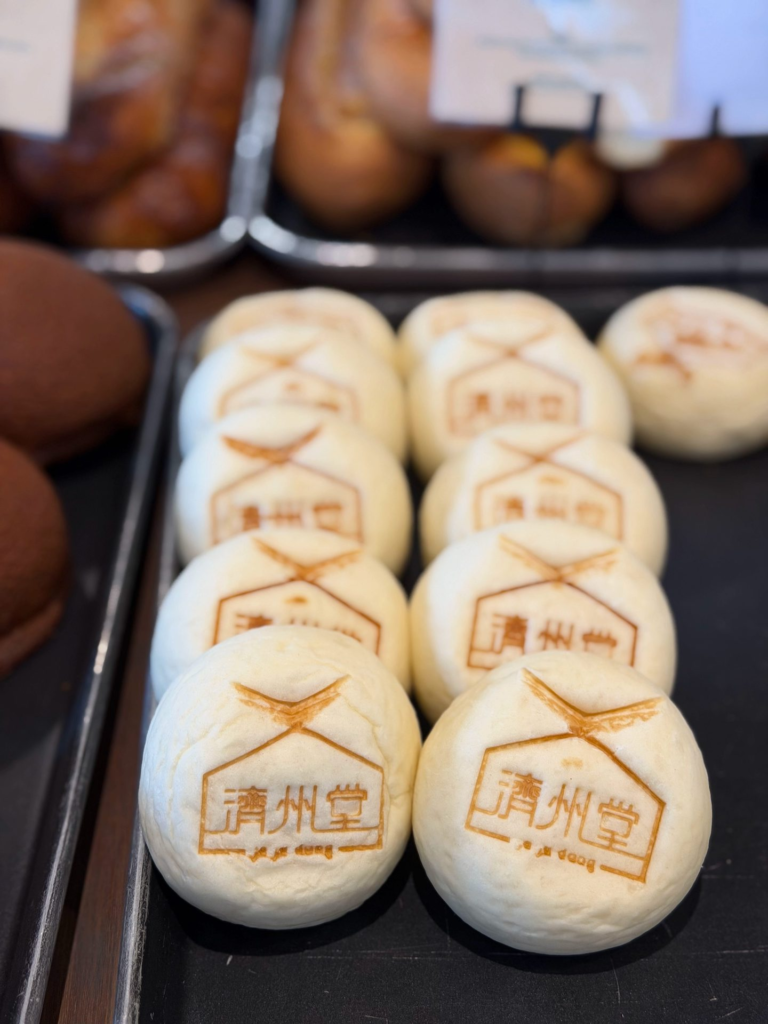
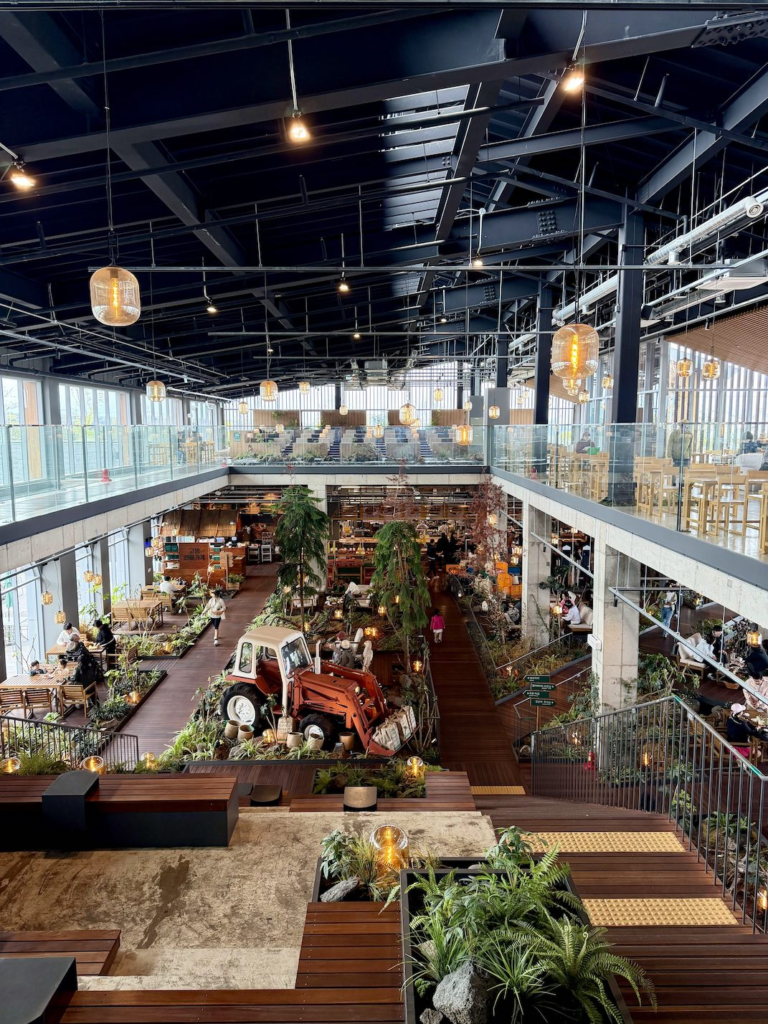
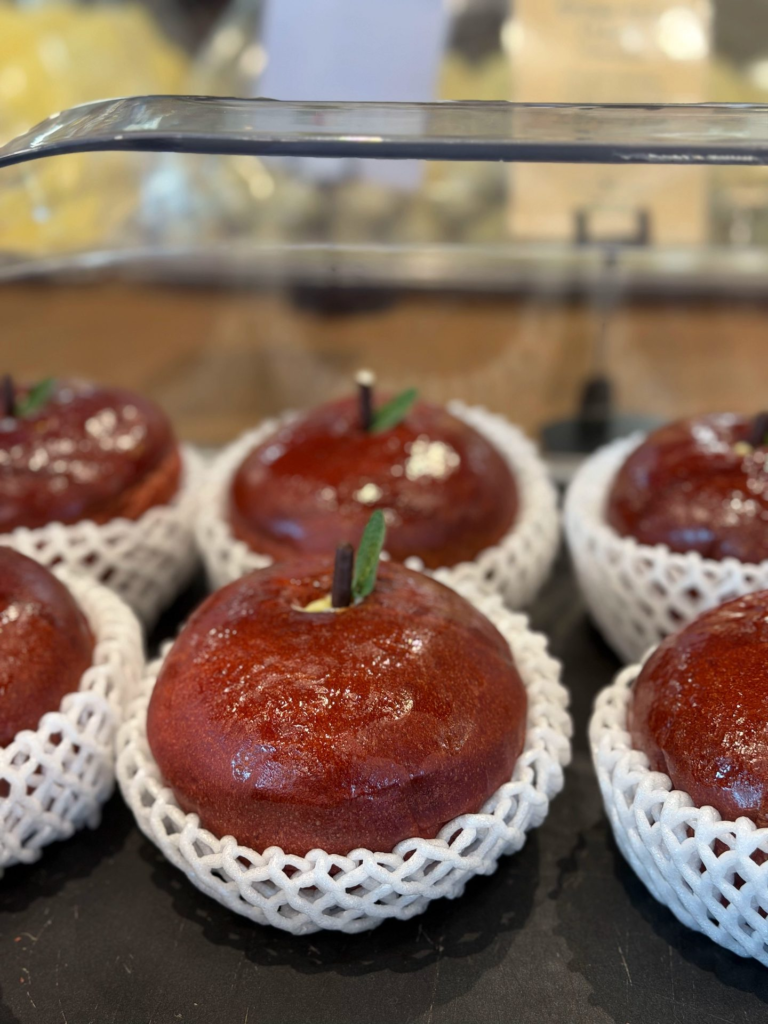
The cafe is spacious, brightly lit and offered such a variety that I allowed my inability to convert the Korean won into Singapore dollars quickly to buy an array of carbs.
From there, it was a quick drive to Saebyeol Friends, a sprawling farm where you can interact and feed black pigs, horses, donkeys, budgies, sheep, geese and even meerkats. We spent more than 2 hours here so do buffer some time (I thought it’d be a quick 45 minute stop).
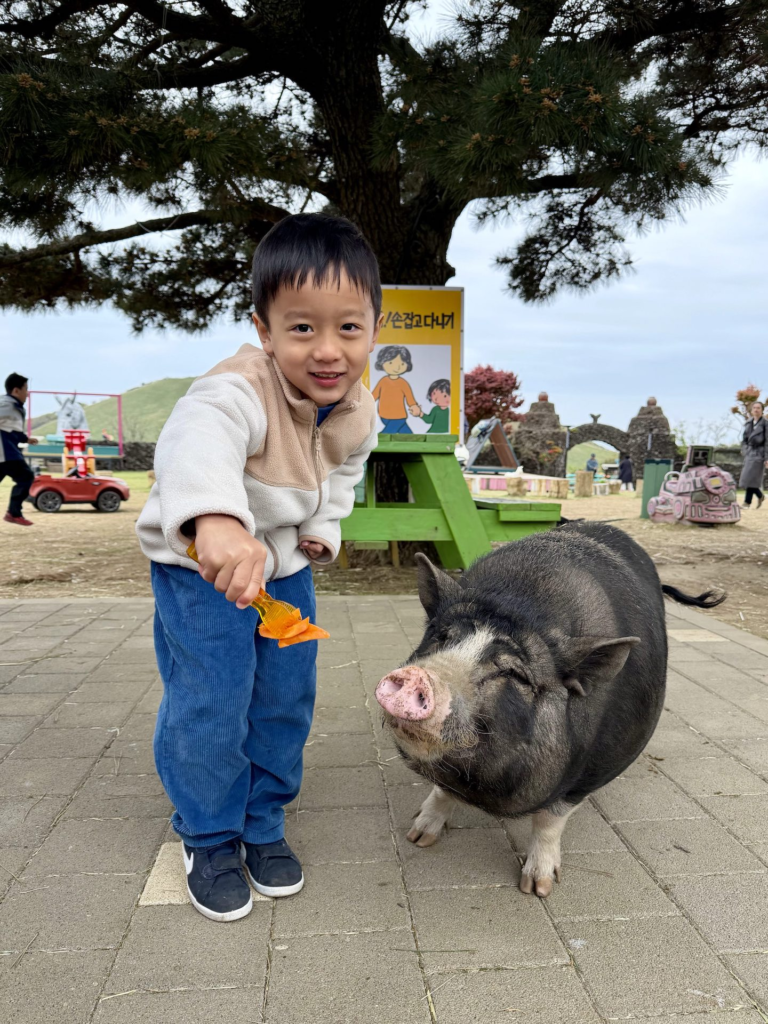
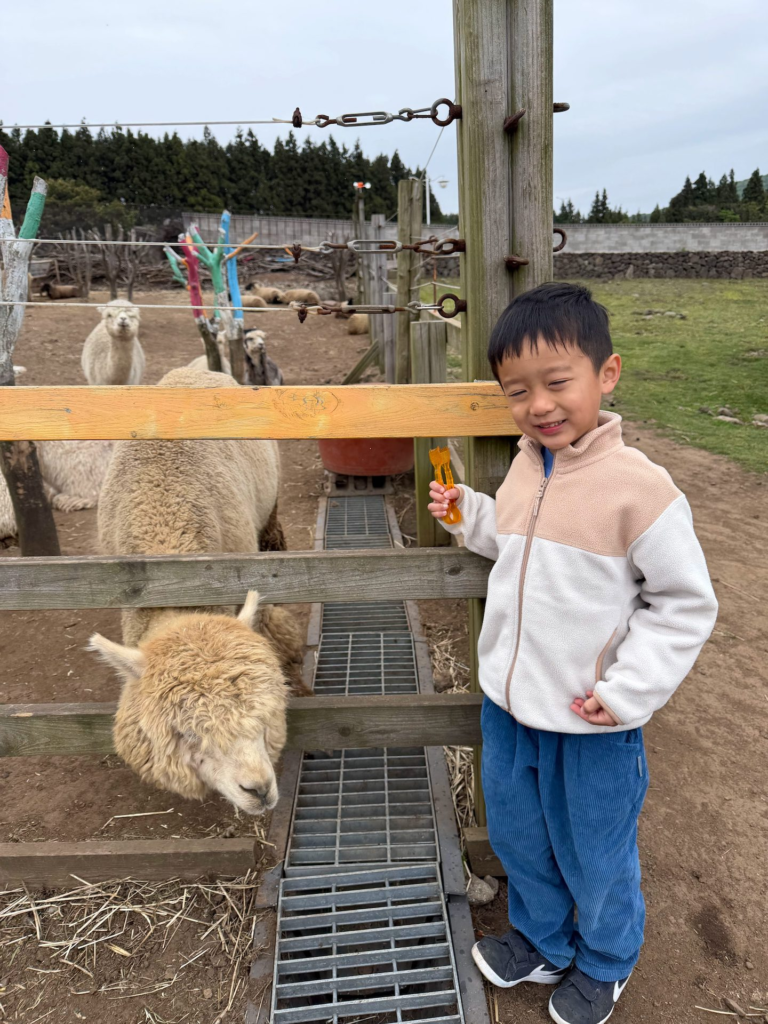
My firstborn had a blast with the animals, to the point that I can’t recall how many rounds of feed I bought. Thankfully they weren’t too expensive, at about 1,000 – 3,000 won per feed. Unfortunately I don’t have too many photos of my other kid, who was scared out of his mind half the time because the free-roaming nature of the farm meant that the animals came into his space quite a bit.
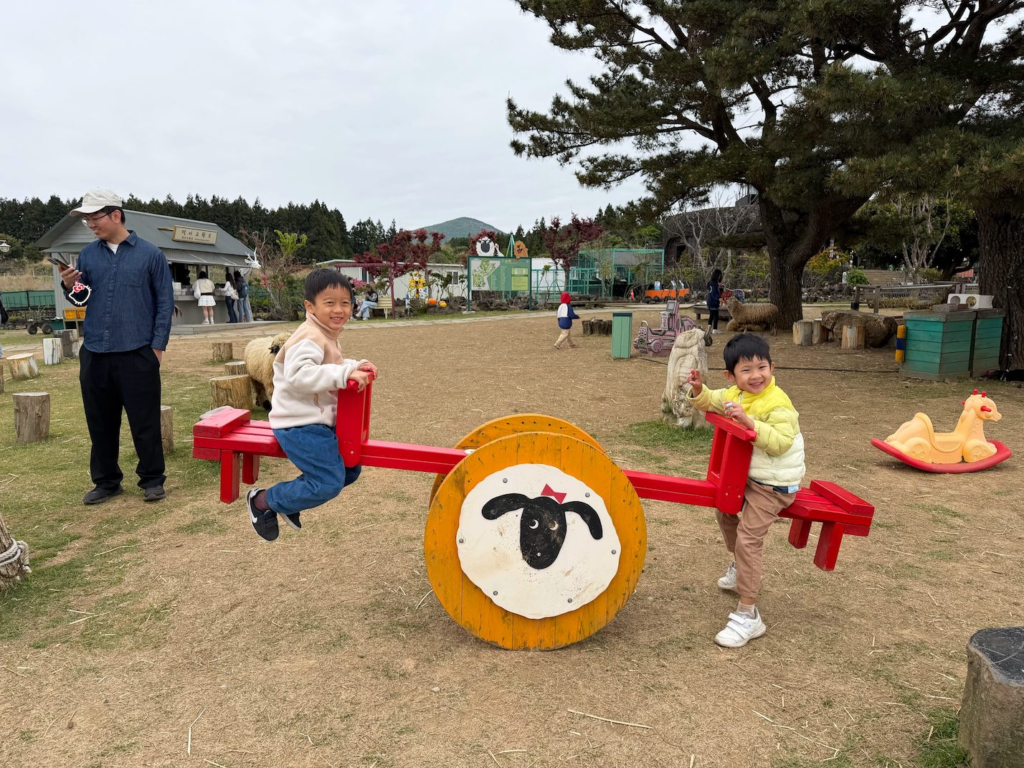
There were also quite a few old-school and random toys and playground equipment left out in the open, but it was a great reminder not to be too judgy because the kids absolutely loved playing on them. They kept negotiating for more time!
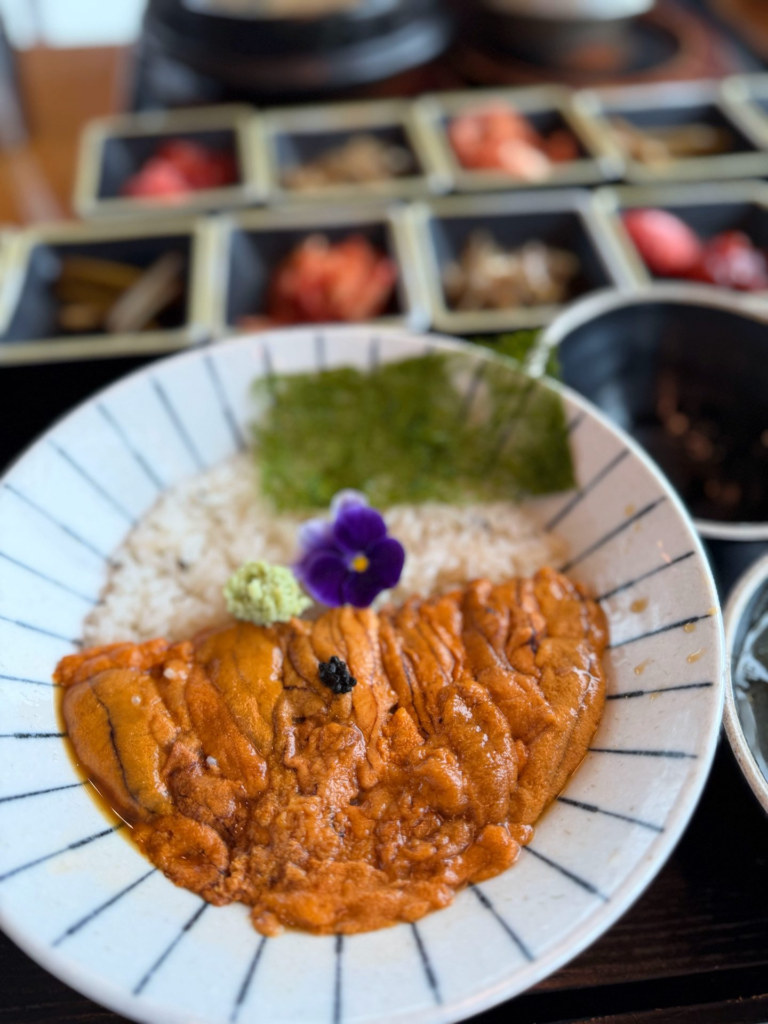
For lunch, we went to Unidam, or what my friend jokingly said was “Singaporean-approved” based on the large number of reviews she read about this place.
If you are in the area, I recommend the uni rice bowl, which was 28,000 won – a price hard to beat in Singapore. I like my uni raw, not cooked, as the umami cuts through more clearly. For that reason, I do not recommend the soup, which kills the very taste I like best.
I had hoped to see the famous haenyeo (Jeju diver women) in action hauling an octopus or something, but we were out of luck the entire time we were there. We did, however, see women collecting seaweed (or bracken?) by the bundles by the sea just outside the restaurant.
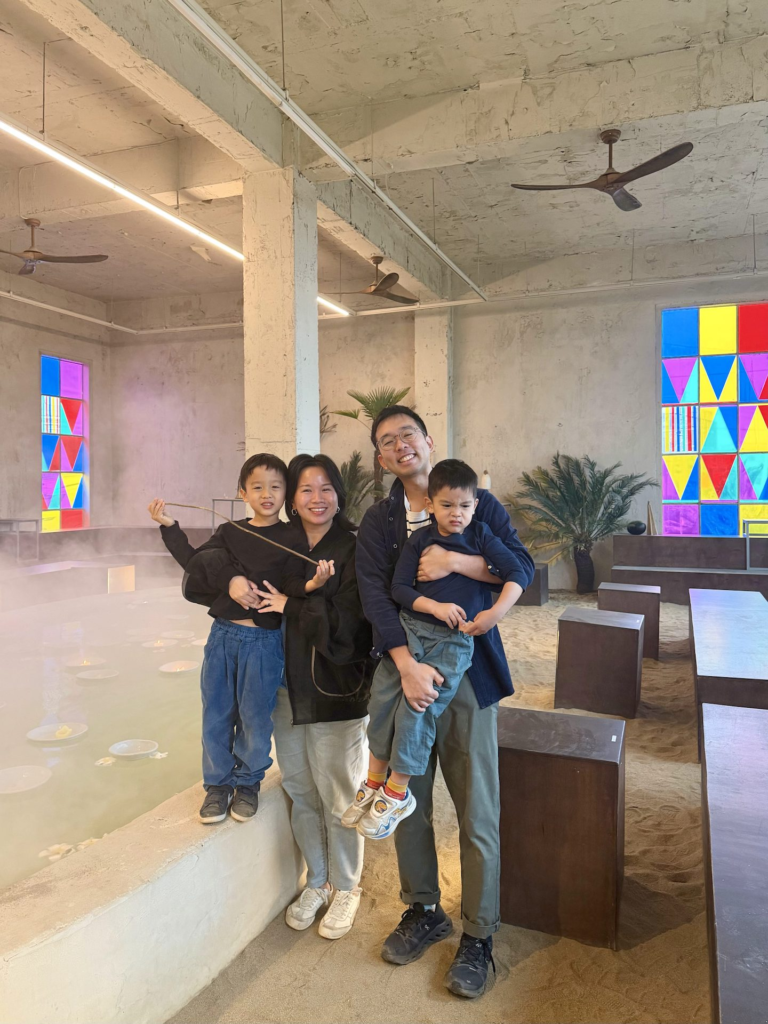
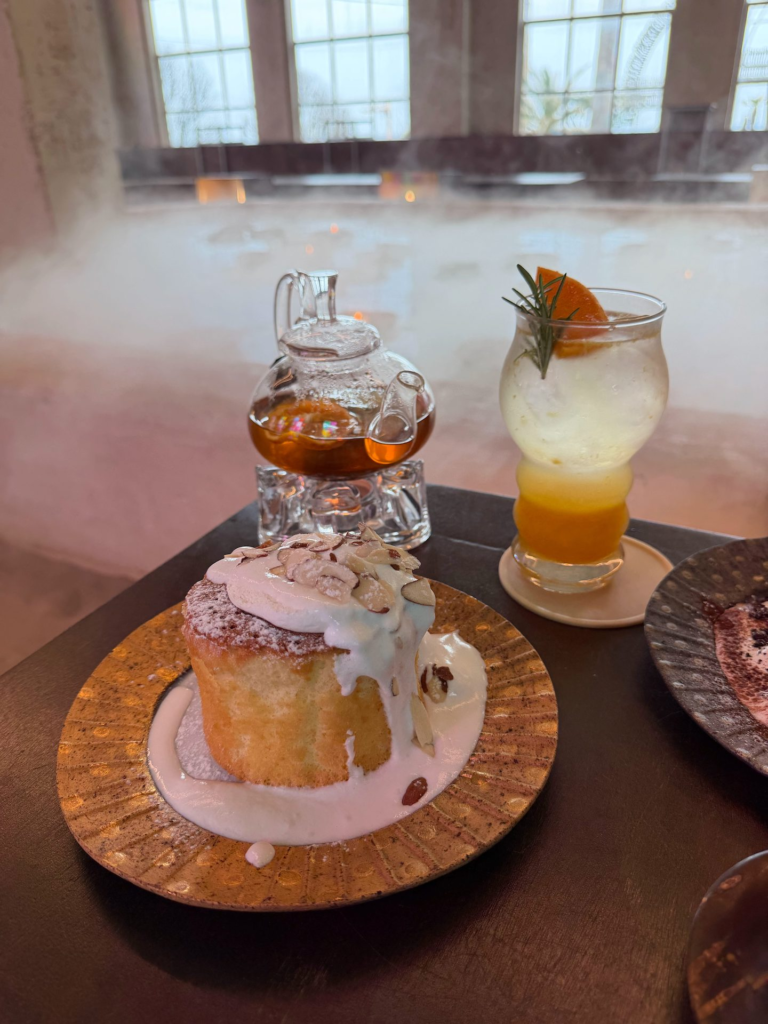
Somehow, we still had room for tea. Haehwatang, without kids, would be wondrously zen – stained glass windows, sound bowls softly clanging against one another in a pool, sand and timed fog, meditative music. We obviously ruined that – four boys have a way of doing so. Dessert was fine but forgettable – you are really there for the vibes. Plus, the boys burnt so much energy climbing treehouses outside. An A+, serendipitous find.
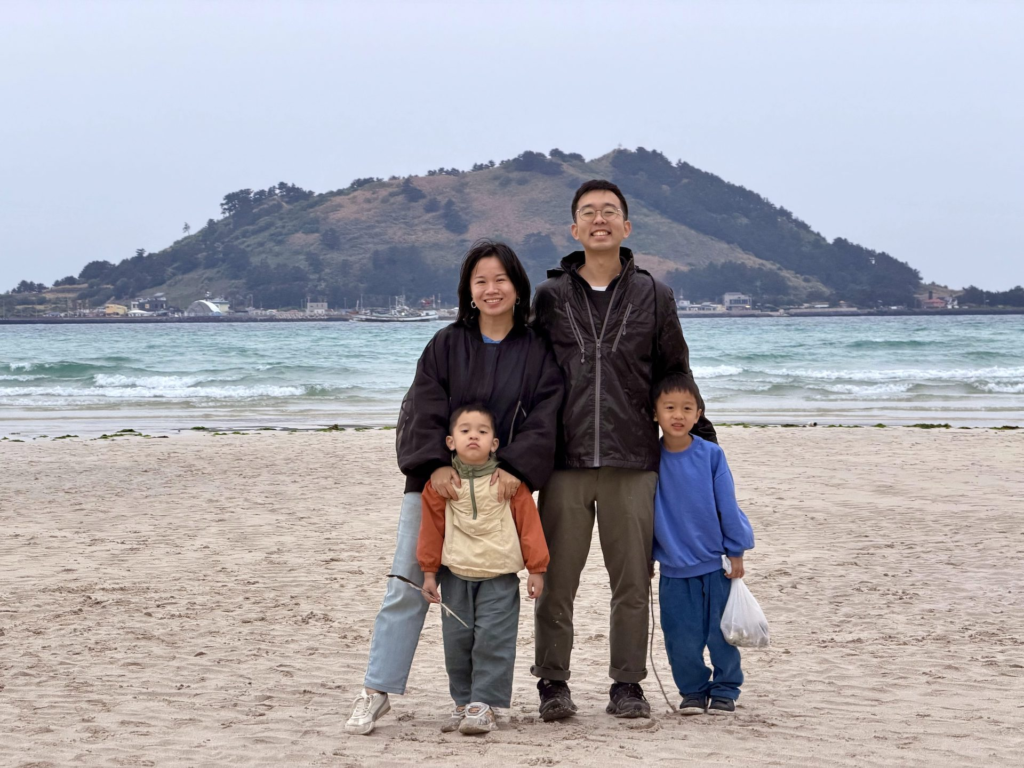
In the evening, we returned to Hyeopjae Beach where low-tide meant we had so much more sand to play with. Snowy (firstborn) collected more shells (spot his plastic bag of treasures!) while Puffy (secondborn) wrote messages in the sand, declaring how much he loves his mummy and daddy :’)
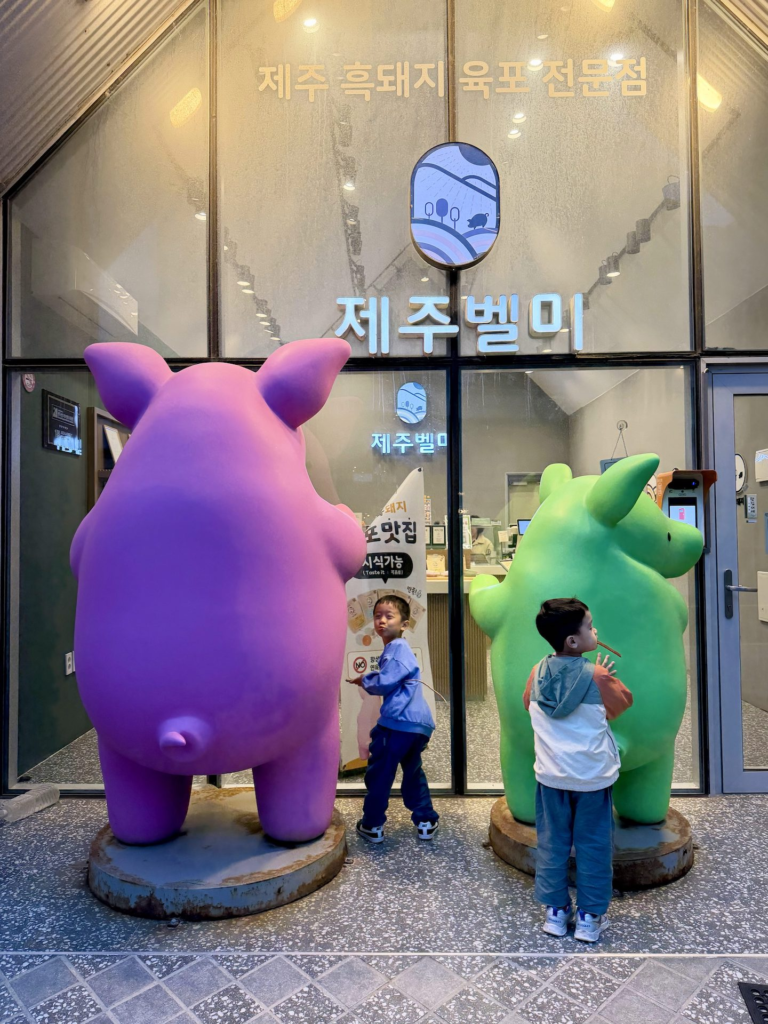
We swung by Jeju Belmi, which sells dried pork jerky made from Jeju black pigs. This makes for a great souvenir – the jerky comes in various flavours including garlic and chili, although all four of us liked the original and tangerine flavours best.
We visited the Hyeopjae Beach location, but the brand has outlets at the Dongmun Market (in the north) and the Seongwipo Maeil Olle Market (south).
Finally, dinner at nearby Hyeopjae deo Kkotdon, or Hyeopjae the Flower Pig, for grilled skin-on pork belly. During peak seasons, it appears there might be a wait but we were able to grab a table quickly during the shoulder season. It was also nice that they grilled the pork for us. We got a mixed set; personally I preferred the white pork to the black pork.
Day 3 – South and central Jeju: Dolphin watching, strawberry picking, Osulloc & Innisfree
This was our most packed day – looking back, I don’t know why we stuffed so much here. That said, we didn’t feel like we were rushing despite the numerous stops.
We started out by heading south towards the port for our dolphin watching tour. We went with Hamo Boat Tours instead of the larger, slightly more luxurious M1917, mainly because we wanted a smaller boat that had fewer people onboard and was able to manoeuvre sharp turns for an adrenaline rush.
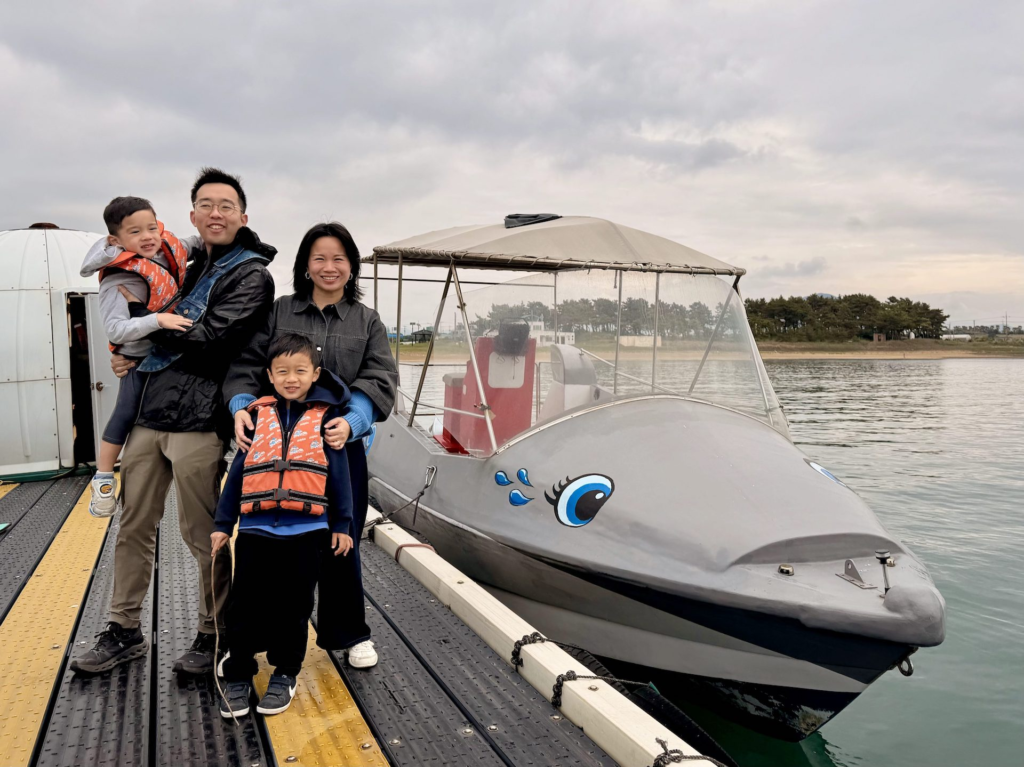
No regrets. Puffy, our younger, was a little frightened but Snowy was so stoked. Plus we got to follow a pod of Indo-Pacific bottlenose dolphins – and even got to see a couple of them leap out of the water. The boat tours can’t guarantee dolphin sightings but the hit rate is as high as 90%.
After the tour, we dropped by one of the mom-and-pop shops at the ‘port’. Puffy got bungeo-ppang (붕어빵), fish-shaped pastry with warm red bean filling, while Snowy got a hot dog.
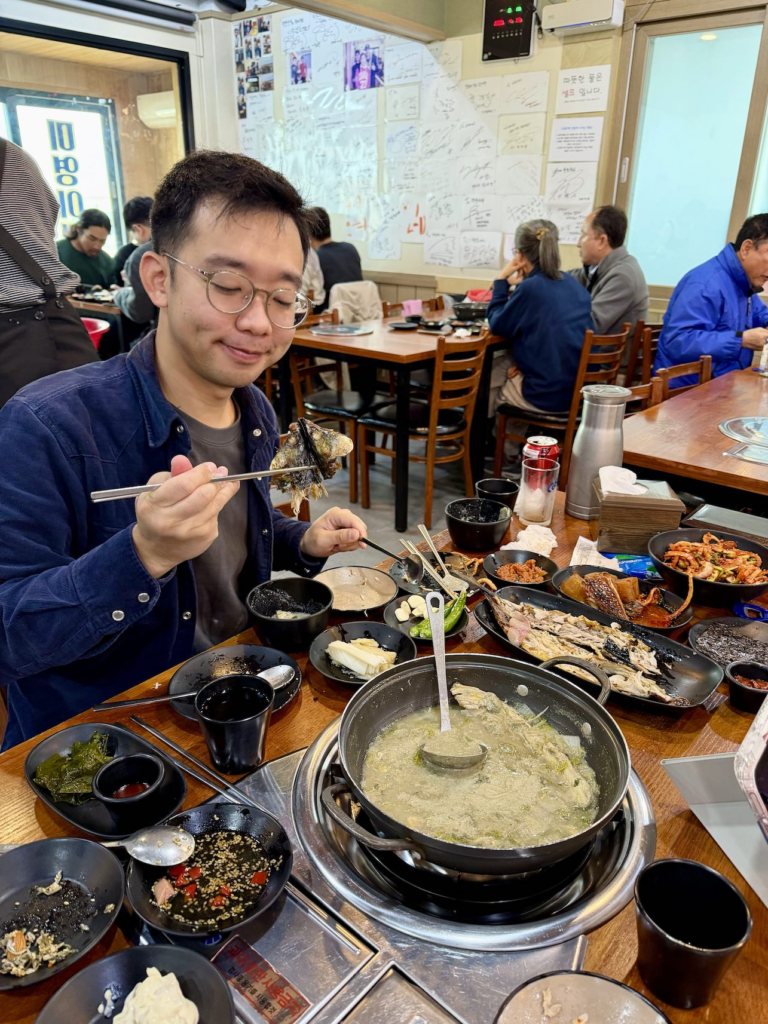
And yet there was still room for a proper lunch. After some faffing around, we settled on Miyoung’s Sashimi for mackerel served multiple ways including, yes, sashimi-style, but also grilled, and in soup. The banchan was really delicious. Recommend!
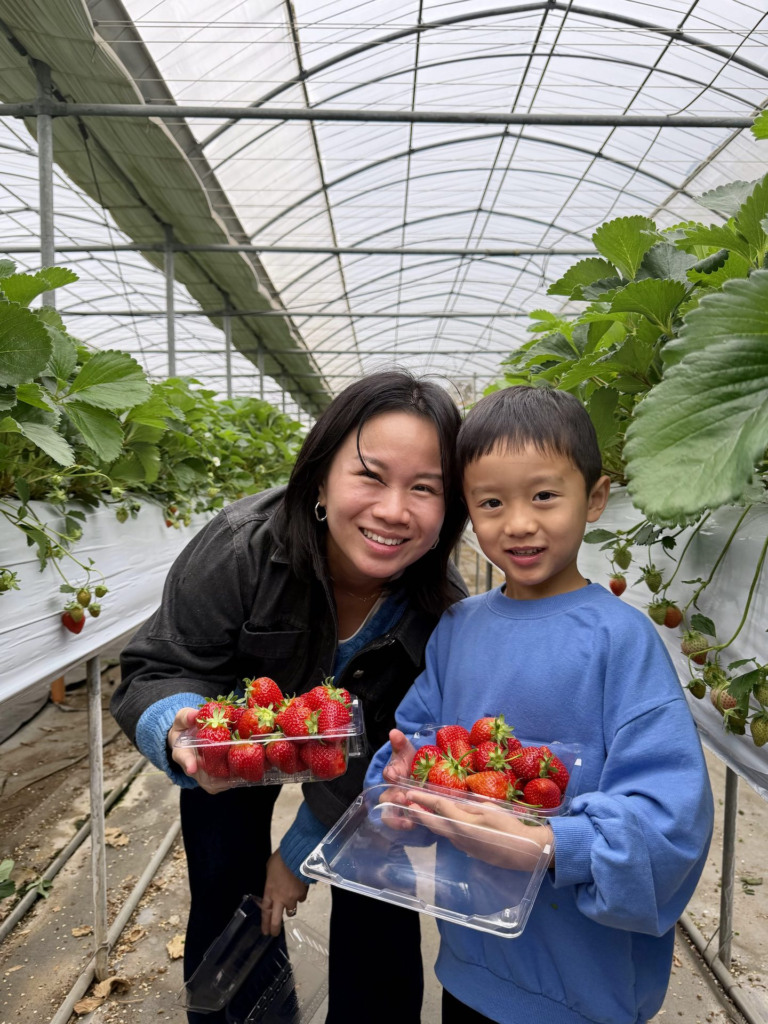
In our earlier trip to Fukuoka this year, the highlight was strawberry picking at Itoshima Berry Farm, with its 8 varieties of strawberries and child-friendly heights at which to pick the fruits. We were eager to replicate this in South Korea, so I reached out to a completely random greenhouse over IG. We enjoyed the fruits, but the owner was a little grumpy so I wouldn’t recommend it.
We then drove to the Osulloc Tea Museum and Innisfree Museum, which are next to each other. This was the first time in Jeju that I felt overwhelmed by the crowds. There were so many cars that we had to park in a spillover lot, and I kid you not, people were sweeping goods off the shelves.
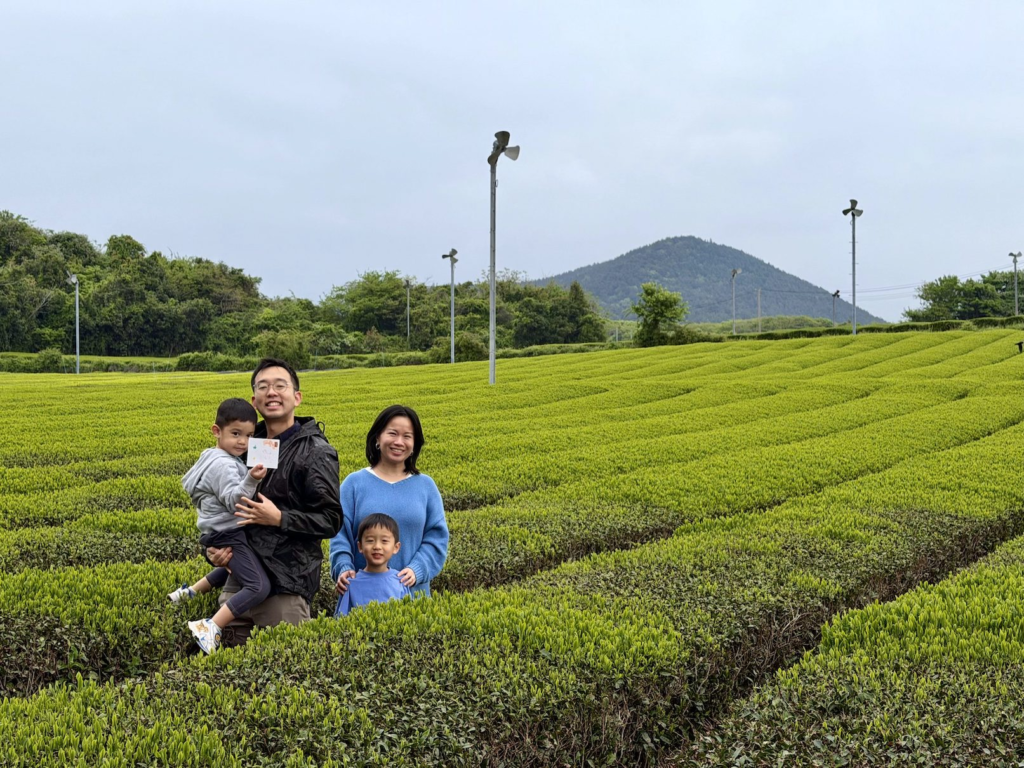
Honest take: skip the trip. Both Innisfree and Osulloc are well-stocked at airport shops, and unless you’re after the full product range, that’s probably enough. The cafes were too crowded to relax in, and the Osulloc lattes and desserts skewed too sweet for us. A good compromise is to grab their Jeju exclusives (tea flavours I loved!) from the front of the store and move on.
One cautionary note: I bought the Innisfree hyaluronic sun serum here and spent weeks wondering why my skin was breaking out before I connected the dots. Check the ingredients carefully if you have sensitive skin.
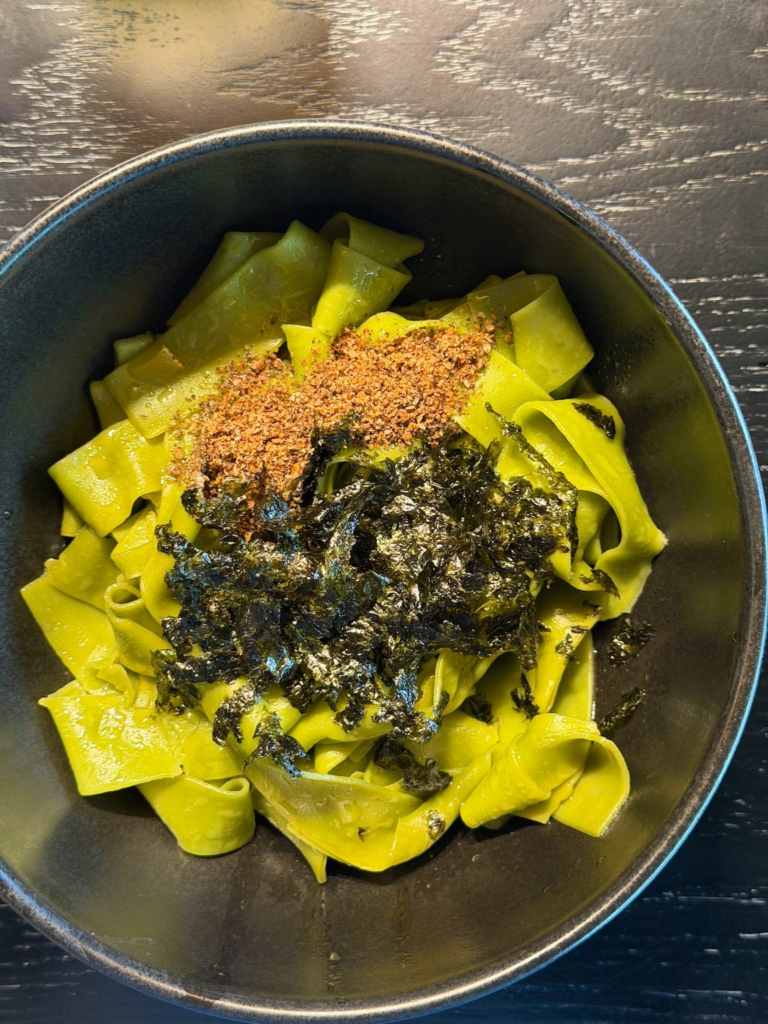
The real find was the Osulloc Noodle Bar – opened late 2025, barely any reviews online when we visited. We loved the matcha-infused noodles so much we ended up with seconds (and this was supposed to just be tea break, mind you). The matcha lent the noodles a subtle earthiness, which my husband described as a nutty chili ban mee, sans the heat. If you must visit this tourist joint, definitely do not miss this restaurant.
This was our last stop for the day, before we headed eastwards to our second of three hotels of the trip: the very gorgeous Stay Nureut.
Day 4 – East Jeju: Snoopy Garden, Gimnyeong Maze and Seopjikoji
The Snoopy Garden came recommended by enough people that I couldn’t ignore it: First, a Gen Z reporter I met through work, then friends, then my husband’s circle. I was never a Peanuts fan, but sometimes you gotta roll with the wisdom of the crowd. Turns out three hours there wasn’t enough!
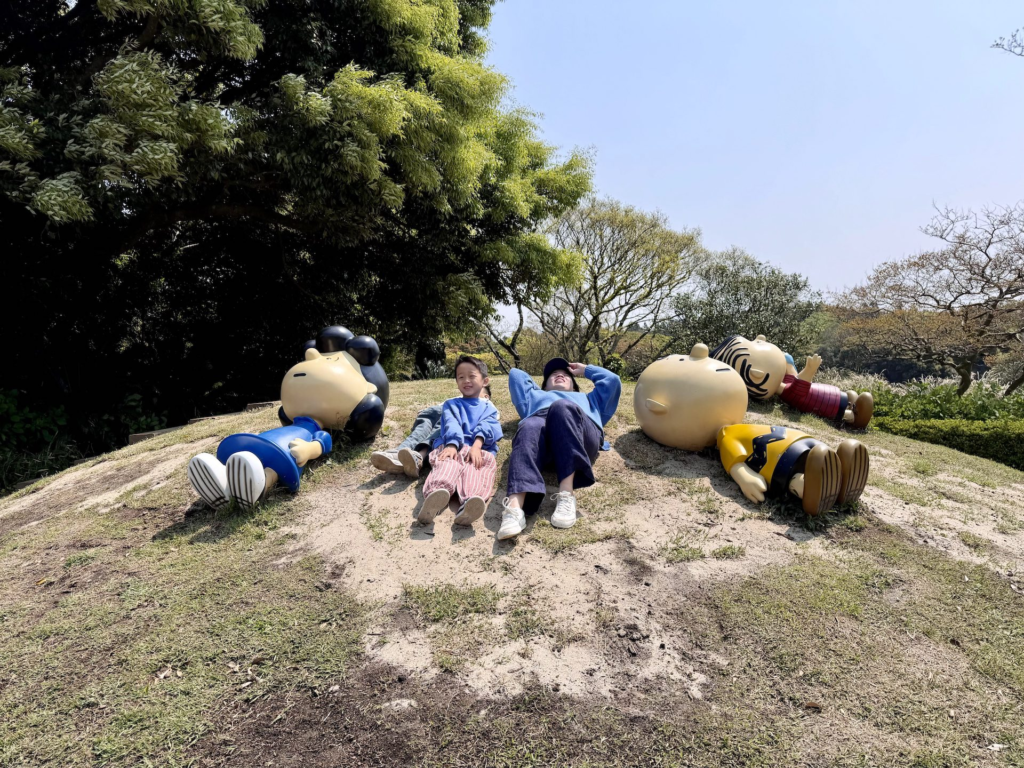
It’s part museum, part garden, and both halves earn their place. The museum itself is rather well-done, taking viewers through various themes, characters, and quotes from Charles Schultz, the Peanuts creator. It was just the right amount of information presented, no small feat for a comic which ran for 50 years. You come away learning something, without being overwhelmed.
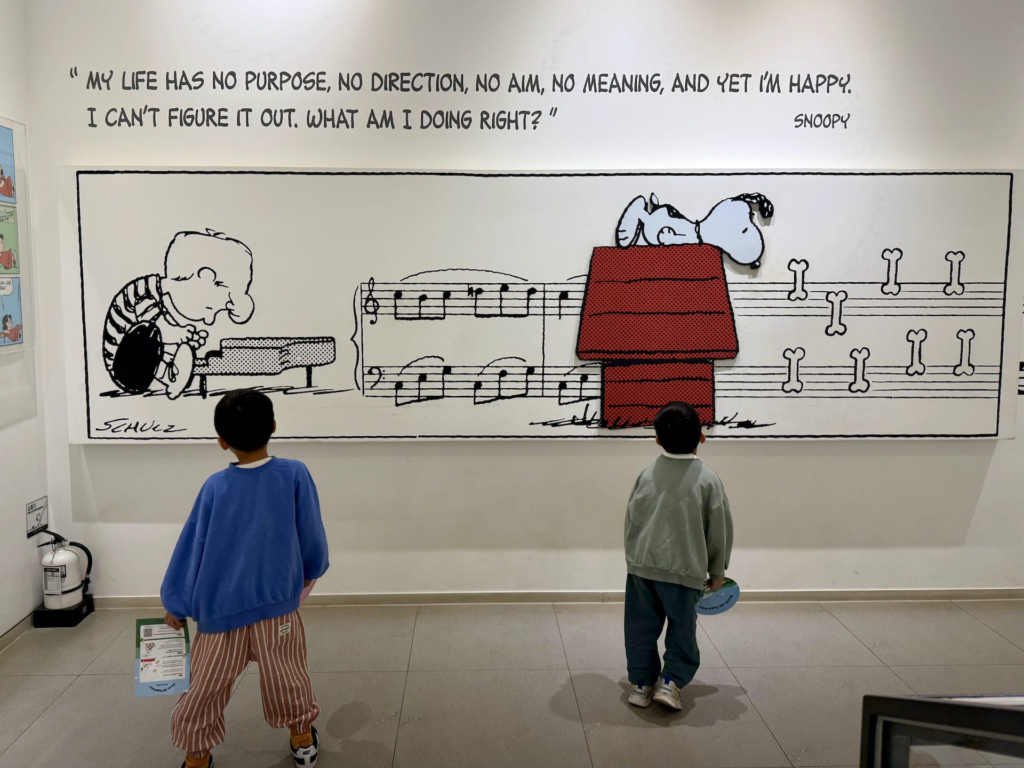
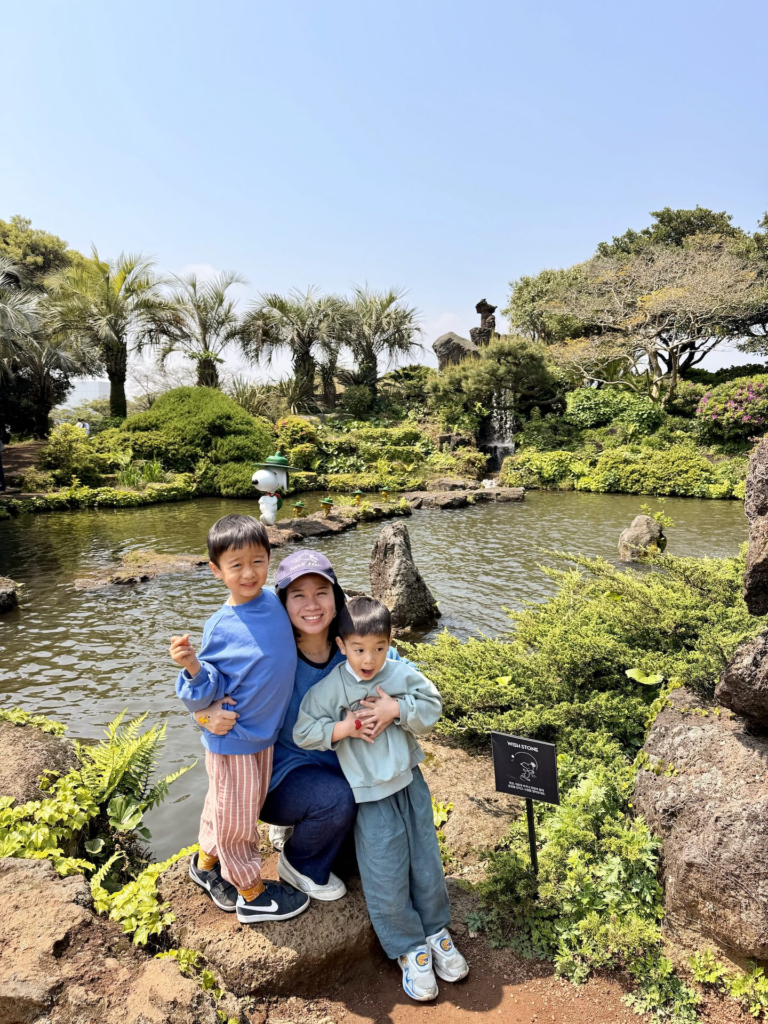
But the garden is where this place shines. Sprawling, beautifully planted, with Peanuts characters woven in tastefully enough that it doesn’t tip into theme park territory. If you have a green thumb you’ll appreciate the botanic curation; if you have kids, you’ll appreciate that they’ll just run. There’s a stamp scavenger hunt across the grounds — collect them all, win a badge. It kept our boys engaged long past the point we expected to keep the kids engaged.
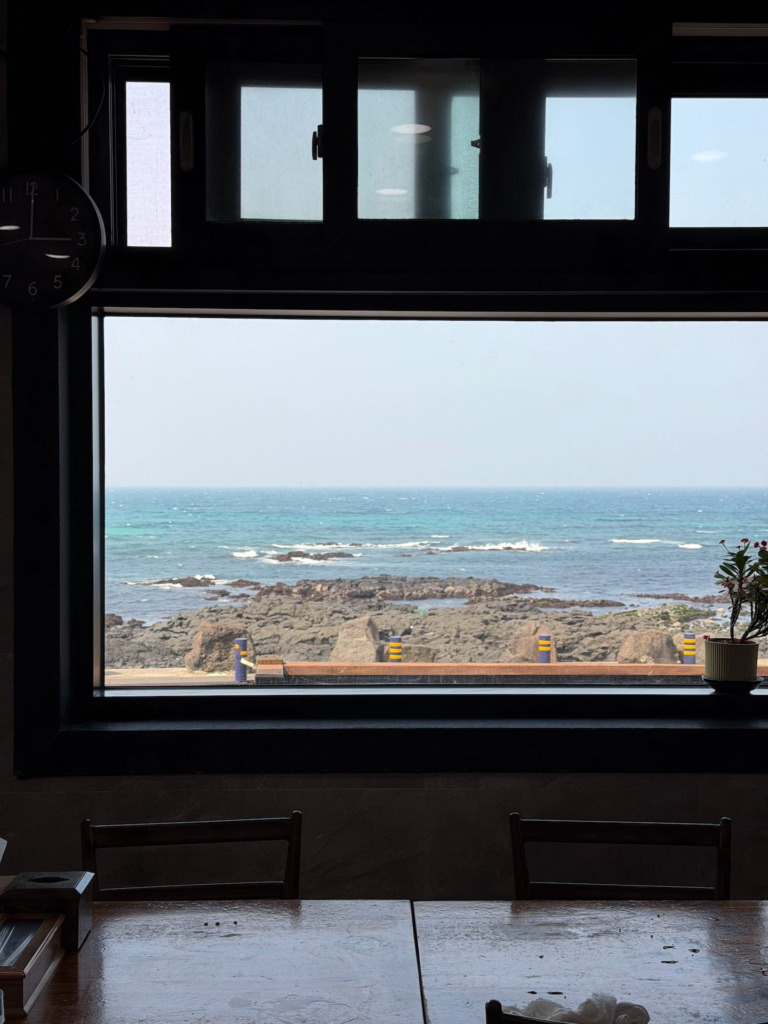
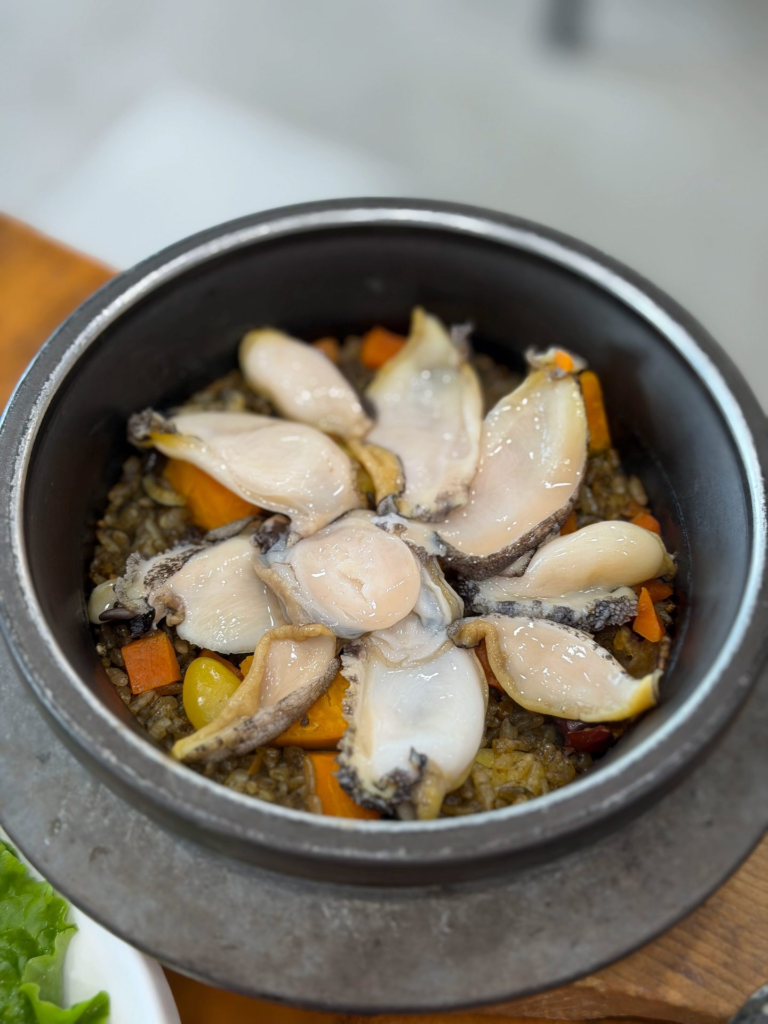
We drove to Myeongjin Abalone where I finally understood what the fuss over abalone porridge was about. Here the porridge, made with abalone intestines, is simultaneously luxurious and comforting at the same time. You have to order in advance, and your dishes are prepped while you wait, but that also means you can simply walk and enjoy the view. We waited about 45 minutes – perfect timing for us as the kids napped in the car.
Gimnyeong Maze was on the itinerary entirely because of my firstborn, who is in a maze-craze. Real hedges, tall enough that you can’t see past them — we hit dead ends and found ourselves back at the start more than once. We made it out in 11 minutes, thanks to my firstborn who inherited my competitive streak and had me running throughout. My husband, stuck with our secondborn who had started to lose his mind, emerged seven minutes behind us. Victory nonetheless.
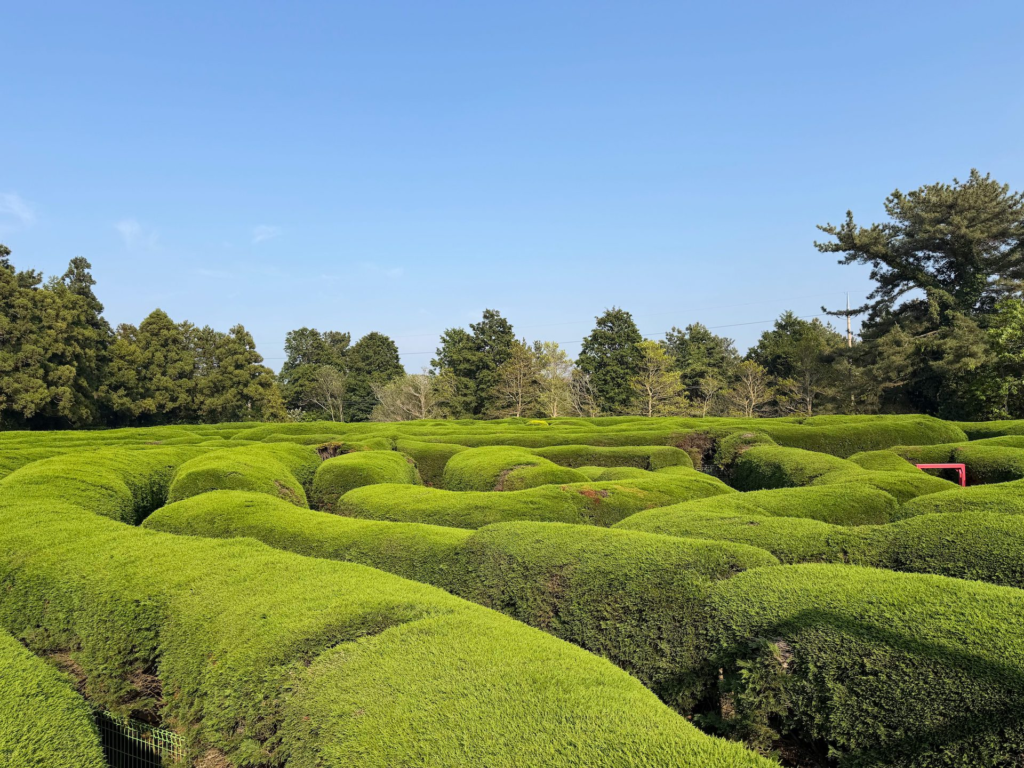
Beyond the maze, there’s an old-school playground, manual luges, and a colony of cats you can feed for a small fee. You can be in and out in 30 minutes or easily stretch to two hours depending on how your kids take to it. Not a destination in itself, but if you’re passing through the northeast side and your kid has any interest in mazes, why not?
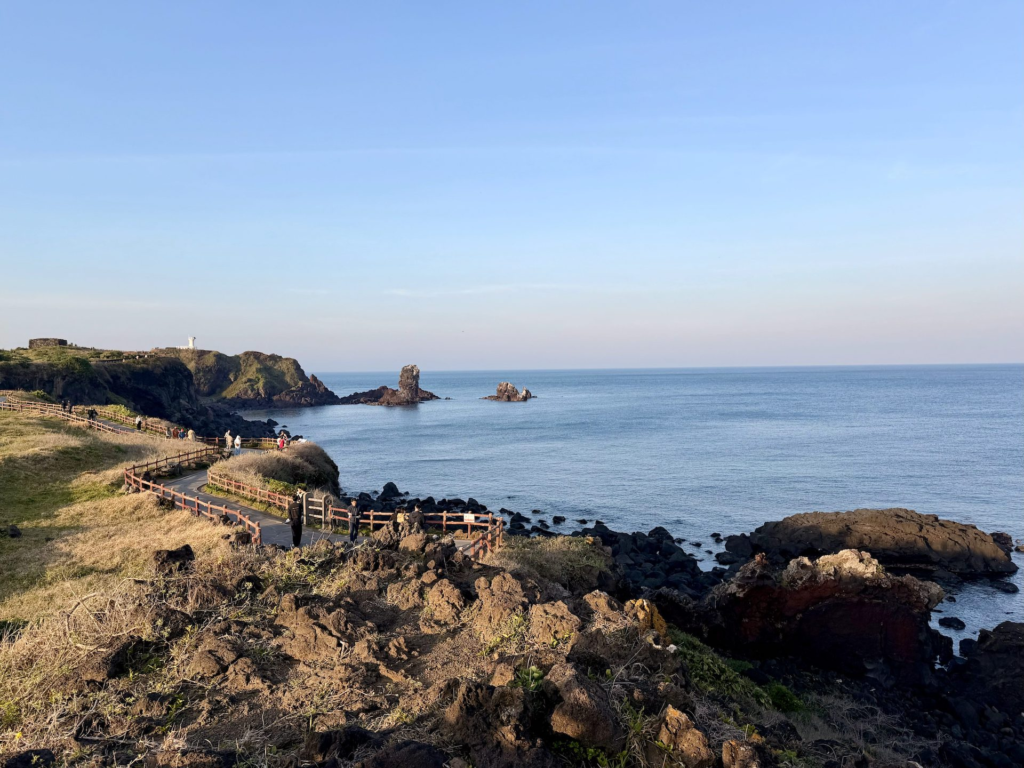
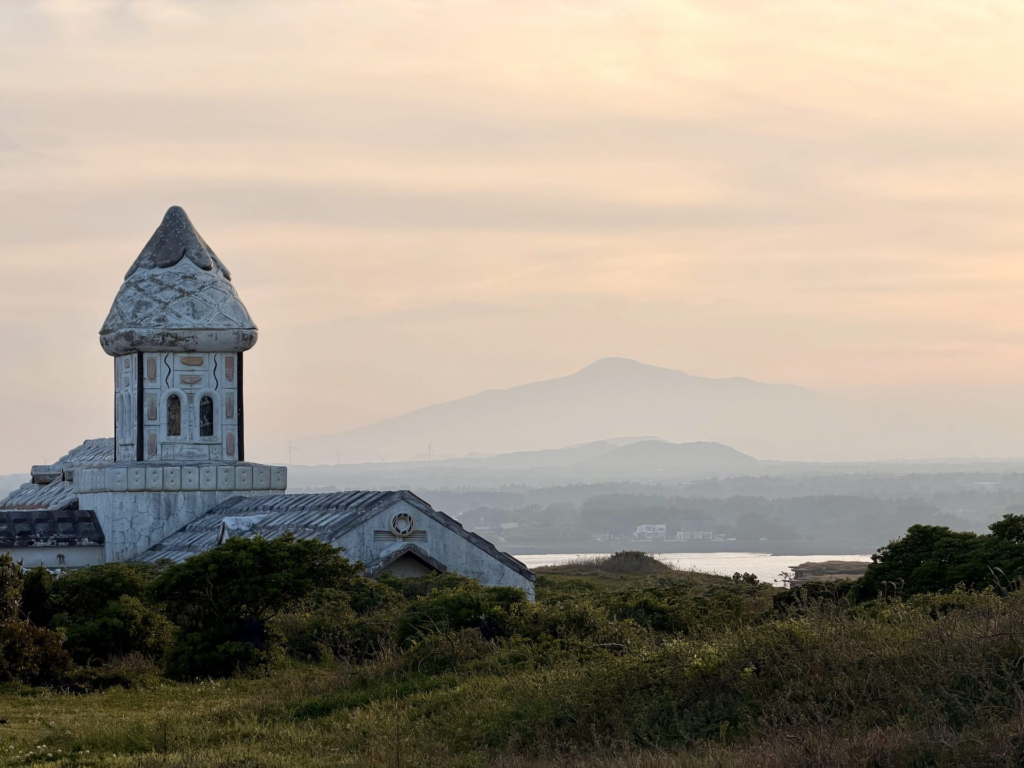
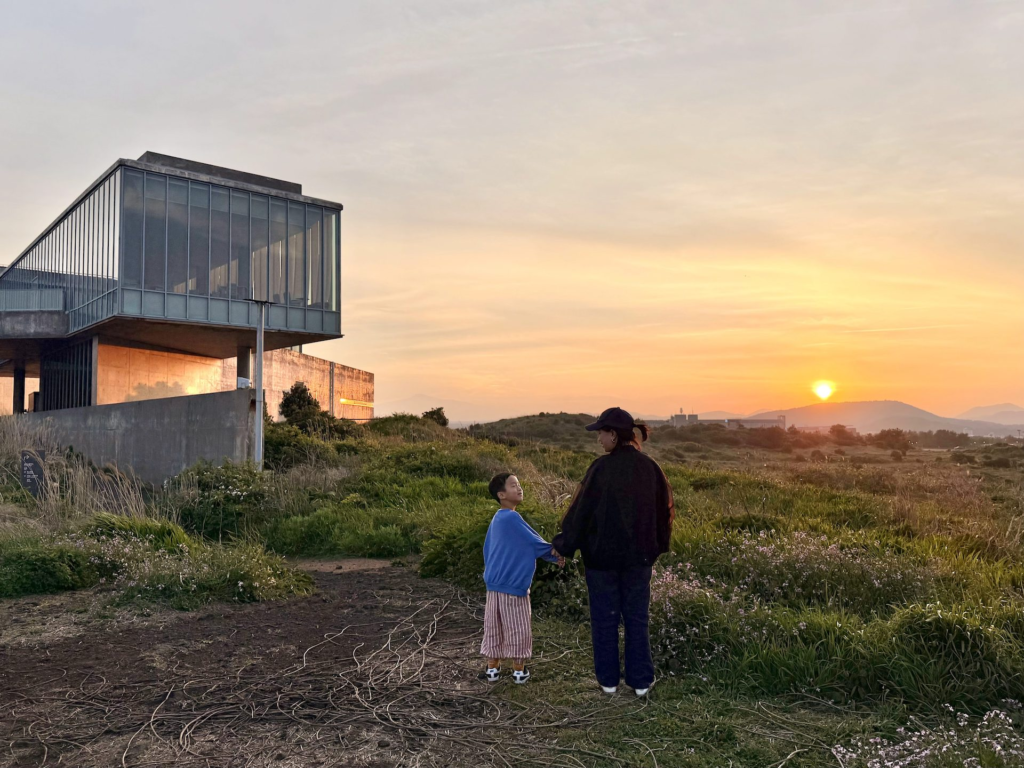
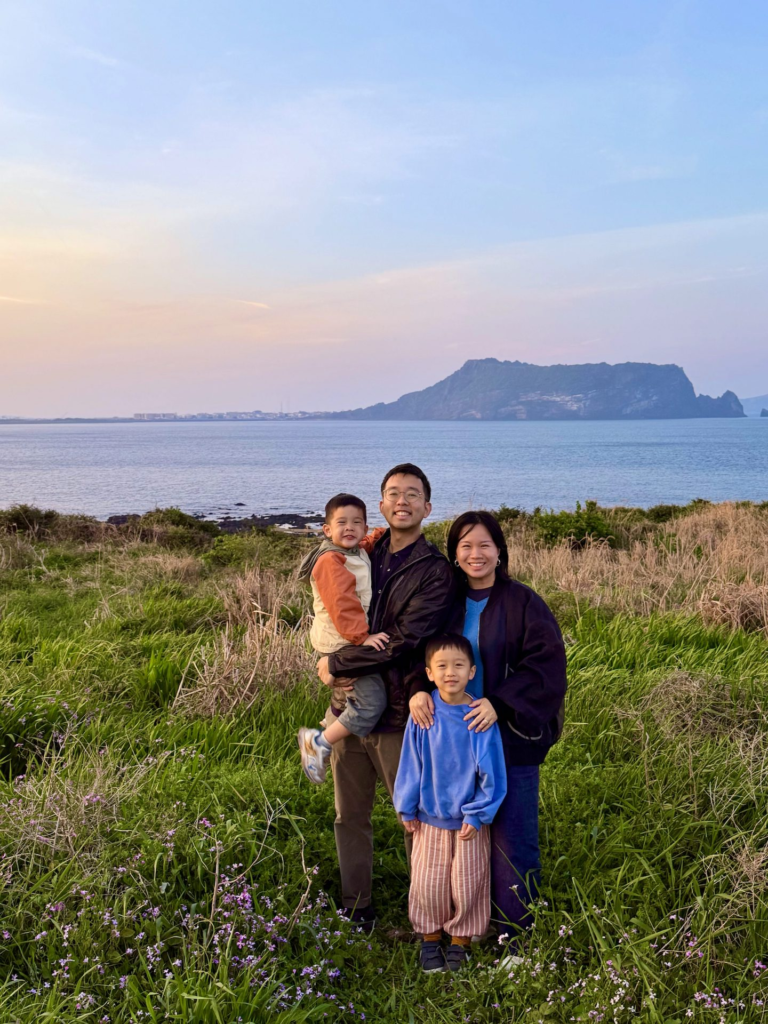
Shockingly, we still had energy, so off we went to do the Seopjikoji Coastal Walk. This is enormous payoff for minimal effort. Go close to sunset if you can; the light on the coastline had me gasping in awe. We strolled, the kids climbed the stairs to the lighthouse, photos were taken in abundance. The whole loop took us about 1.5 hours.
The one miscalculation: we cut it close to nightfall. By the time we started to turn back, we were losing light fast enough for it to be mildly concerning. Factor that in if going with young kids – I was definitely that mom yelling at her boys to hurry up and run.
Day 5 – East and South Jeju: Boromwat, Daepo Jusangjeolli Cliff, Jeju Stadium
Stay Nureut shares its land with Boromwat, a working farm — which meant our morning activity was simply walking next door. We cracked macadamia nuts straight from the source, sampled chocolates made from cocoa grown onsite, and sipped roasted barley tea. The kids made new friends from Seoul while there, fed horses, and rose a ‘tin can’ train. It was a perfect way to spend a chill morning.
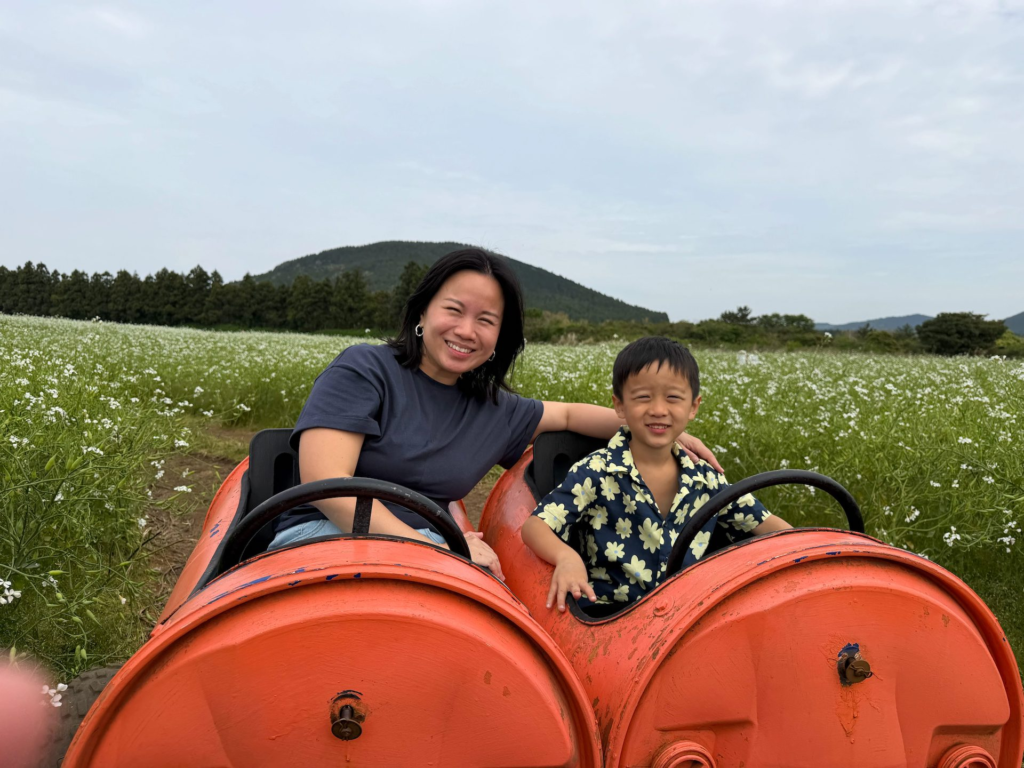
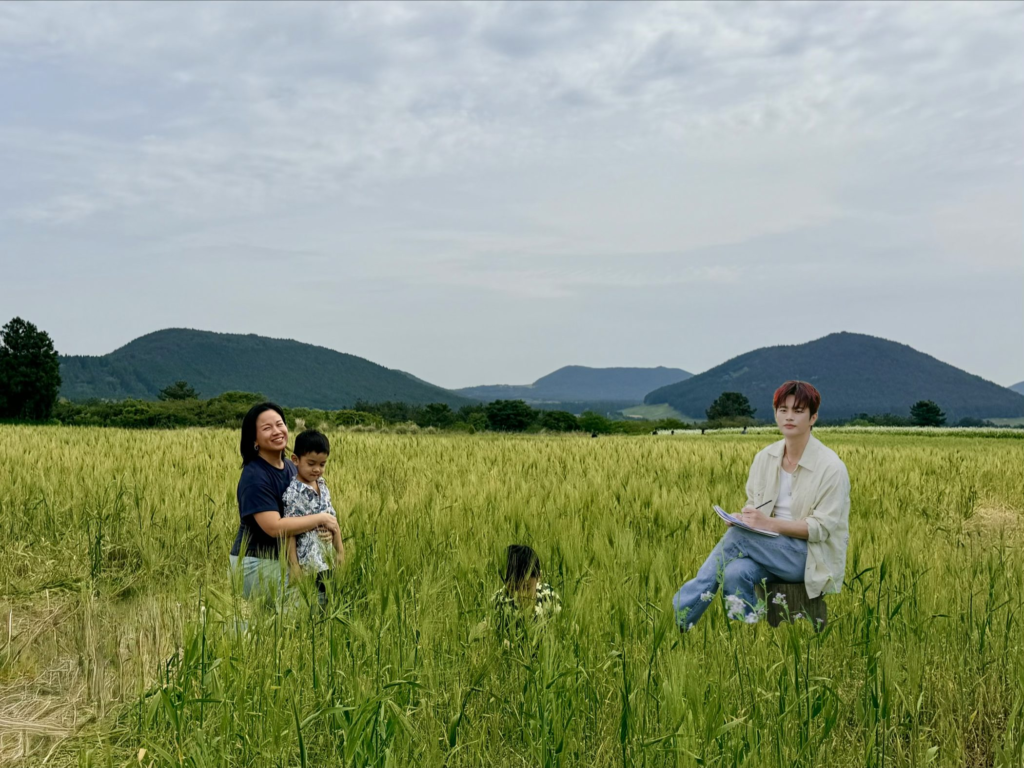
I also found out a scene from Boyfriend on Demand — the K-drama I had literally just finished — was filmed right where I was standing. I may or may not have photoshopped Seo In-guk into my shot.
From Boromwat, we drove down south to Daepo Jusangjeolli Cliff. Jusangjeolli is Korean for columnar jointing, and the cliff was formed when the lava from Mount Hallasan cooled rapidly as it touched the seawater of Jungmun. The ‘pillars’ are hexagonal and form a honeycombed staircase.
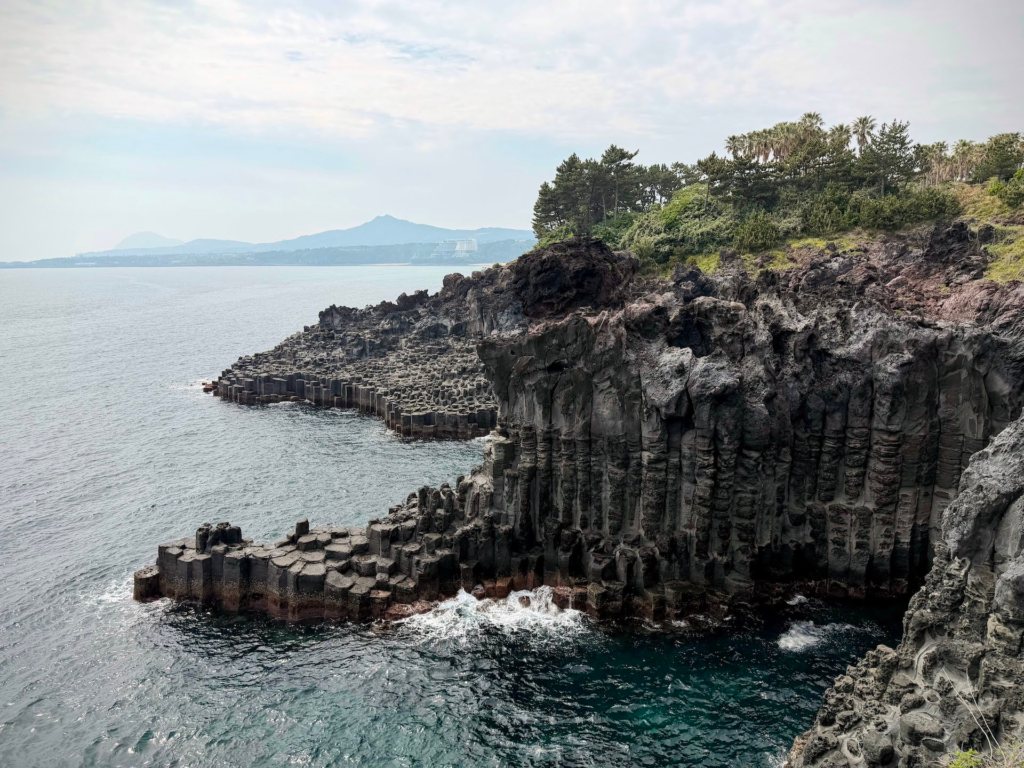
I thought it was beautiful, but it will be crowded and you only need about 20 minutes at the observational deck. We saw on Instagram that there are less crowded spots to travel to, but we didn’t have the bandwidth – not on our first trip to Jeju anyway.
We then drove to Jeju Stadium, which was built for the 2002 World Cup. A pleasing coincidence we were visiting in 2026, yet another World Cup year.
A word on my husband: Wherever we travel, he will find a football match. I have learned to accept this. It has taken us to some memorable places — most notably Istanbul in 2019, where I genuinely thought I might not make it out of a Fenerbahçe vs Galatasaray derby alive. Jeju United SK vs Jeonbuk Hyundai Motors FC was, by comparison, extremely civilised.
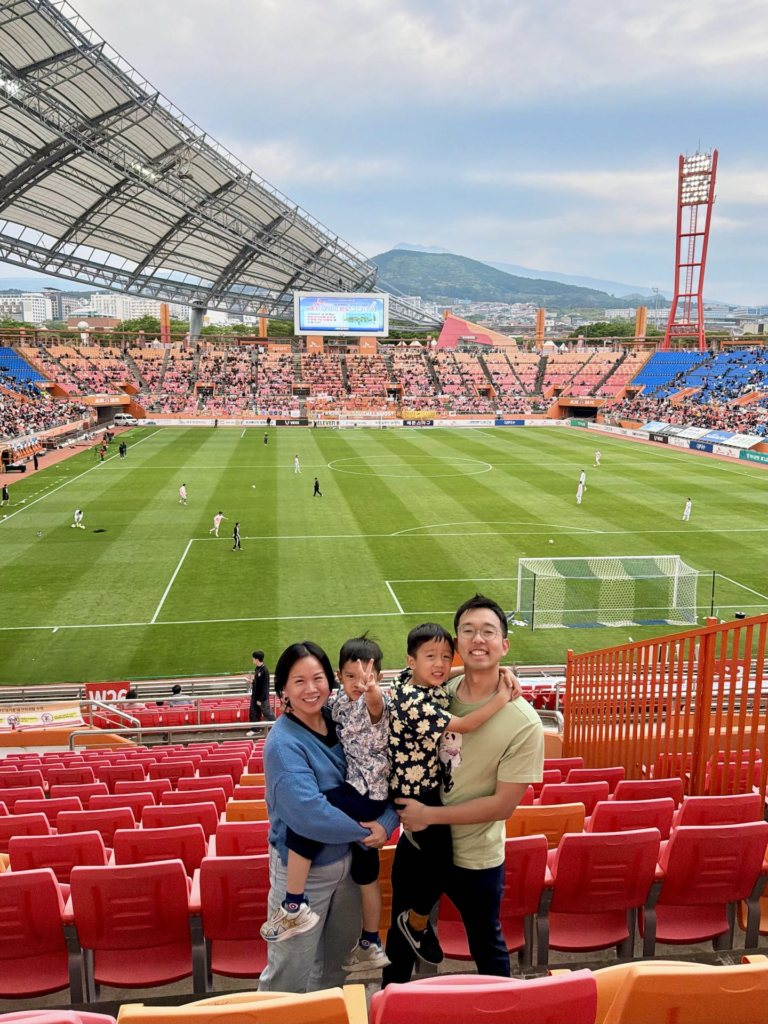
While I was not quite interested in the football, I was fascinated by the stadium. It was built 14 meters into the ground to protect it from strong island winds, while its roof is designed to resemble the sails of traditional Jeju fishing boats.
The landscape from our seats was truly breathtaking.
After the match (Jeju lost 0-2), we drove to our final hotel of the trip in Seogwipo (south) – the functional GoldOne Hotel & Suites.
Day 6 – Goodbye Jeju: Figure Museum and Father’s Garden
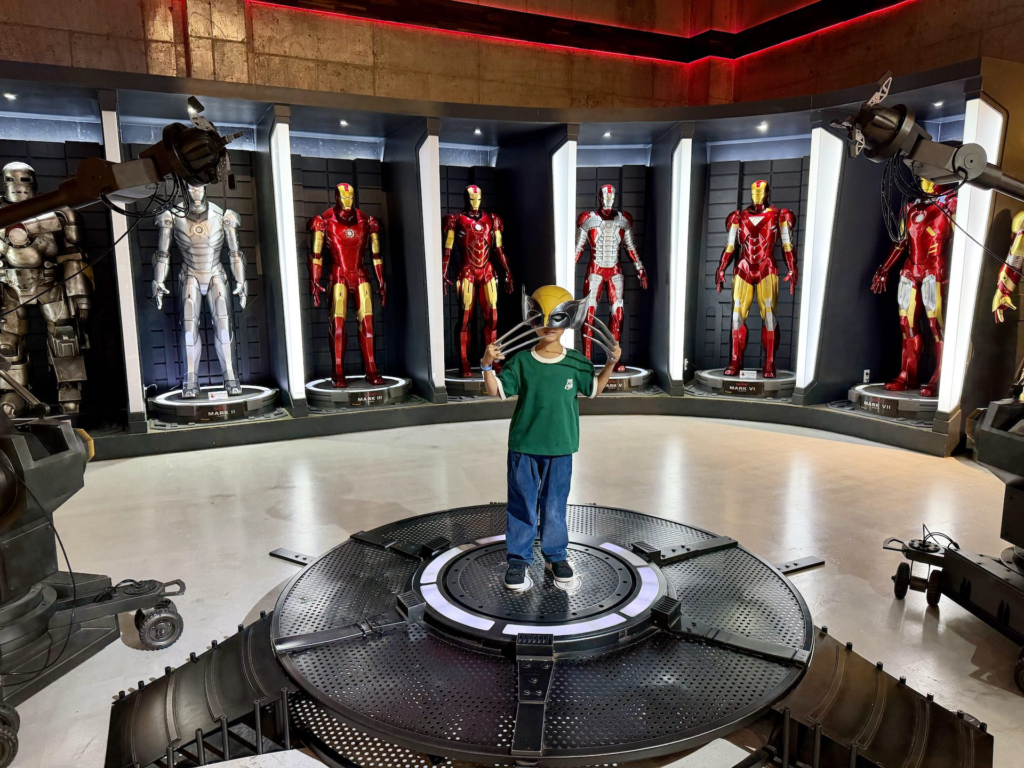
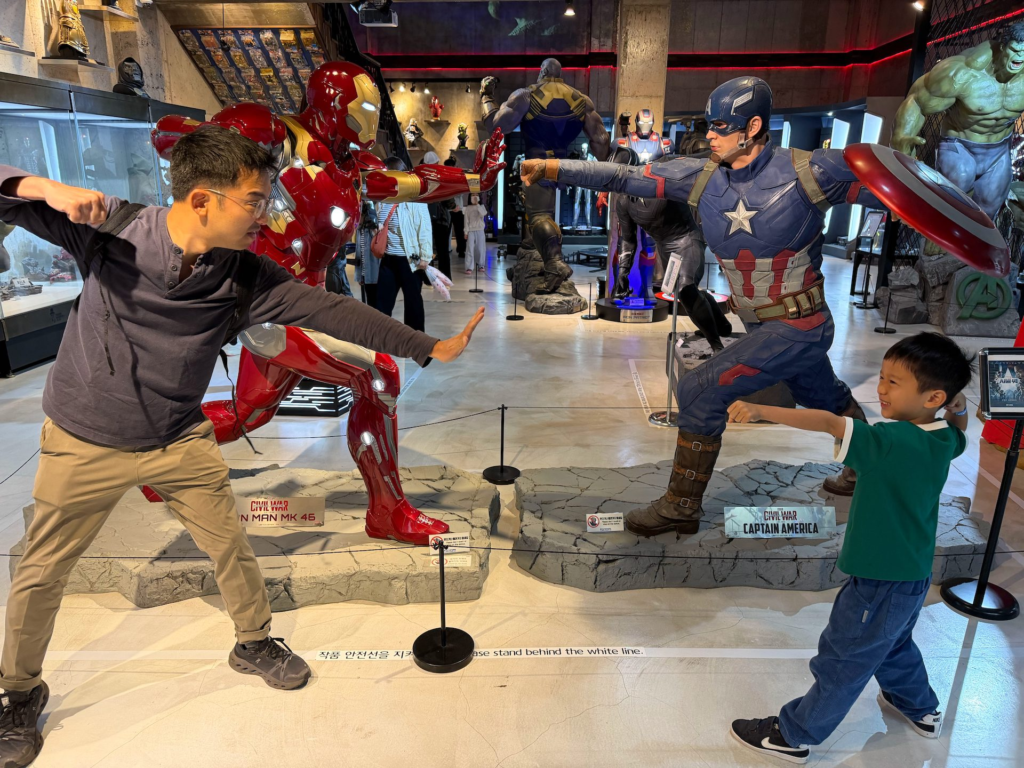
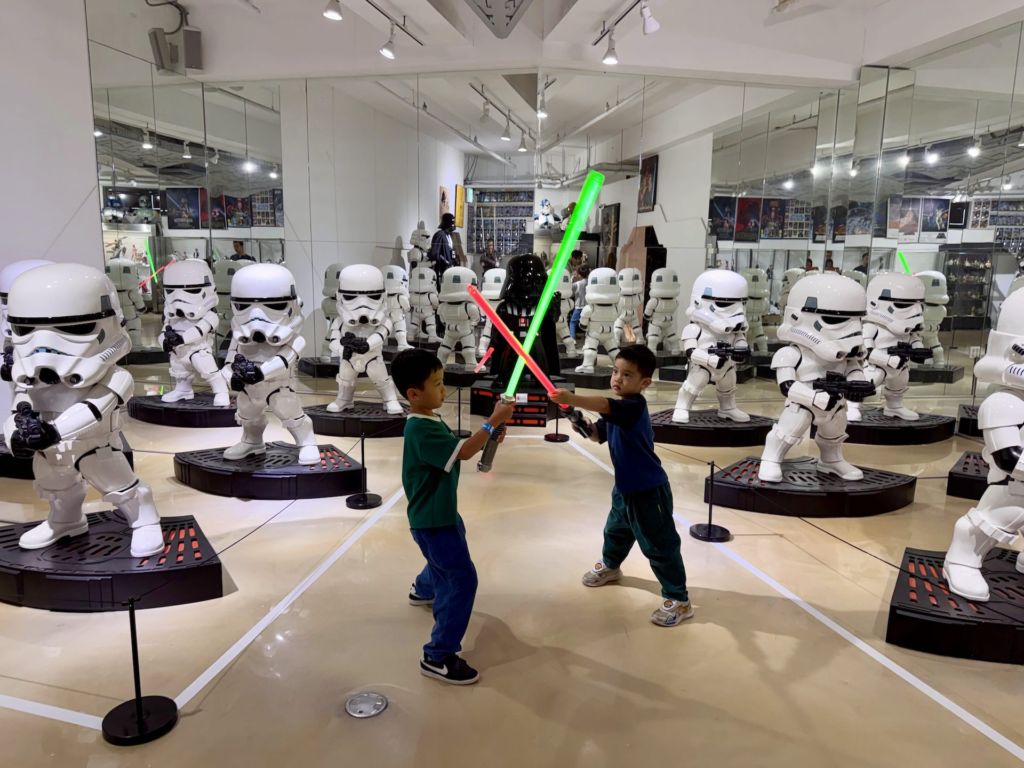
For the previous five days, we had cloudy days and sunny ones, and we were so blessed that it only rained on our last day. Even then, the rain in Jeju carries an air of romance. As parents to two Avengers fans, we found ourselves in Figure Museum – a two-storey museum filled with high-quality figurines and statues of any fandom you can think of (Disney, Game of Thrones, Star Wars, One Piece, etc). Budget at least 1 hour.
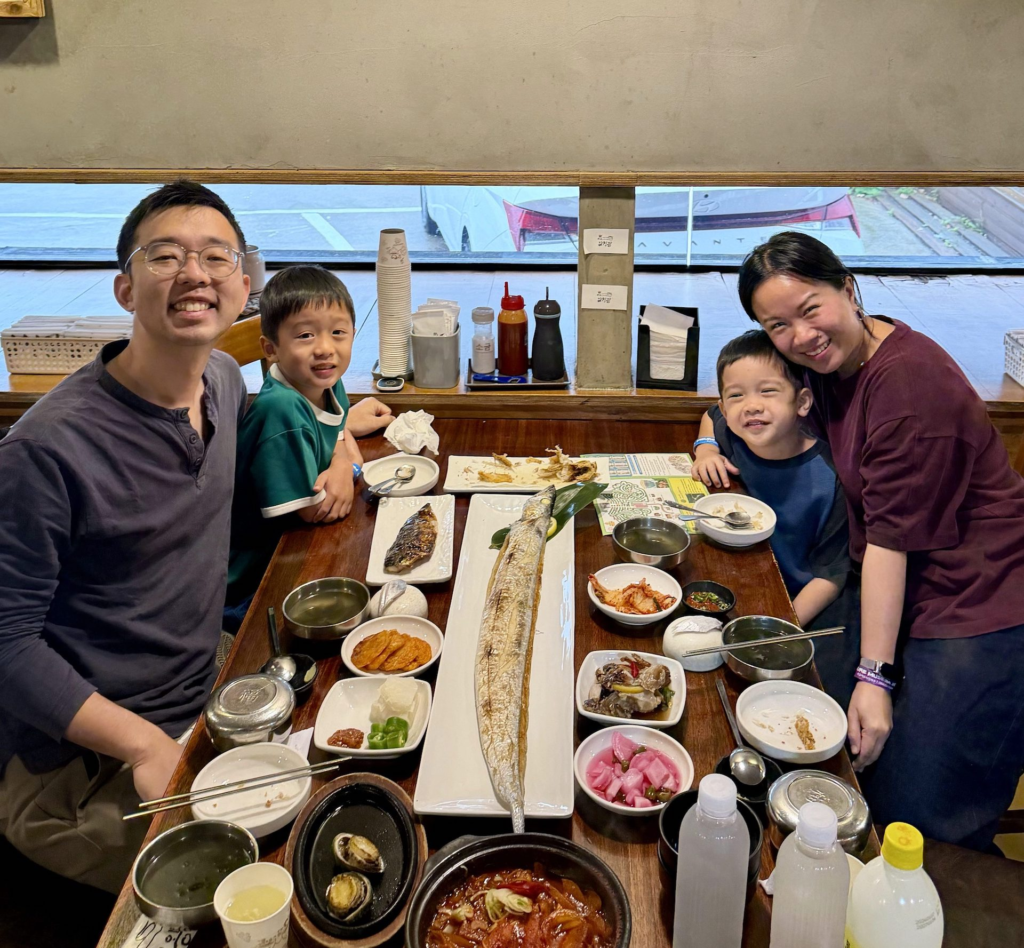
For lunch, we tried cutlassfish, a famous Jeju delicacy known for its tender and mildly sweet white flesh, at Galchiwang. This usually has a long wait but for some reason we found the golden 15 minutes to step into the restaurant (shortly after, a line had formed and would-be diners had to wait in a nearby ‘shed’ to avoid the rain).
As you can see, the fish is super long. Apparently it spoils quickly, so Jeju is one of the few places you can try this. The kids loved it. 100% recommend.
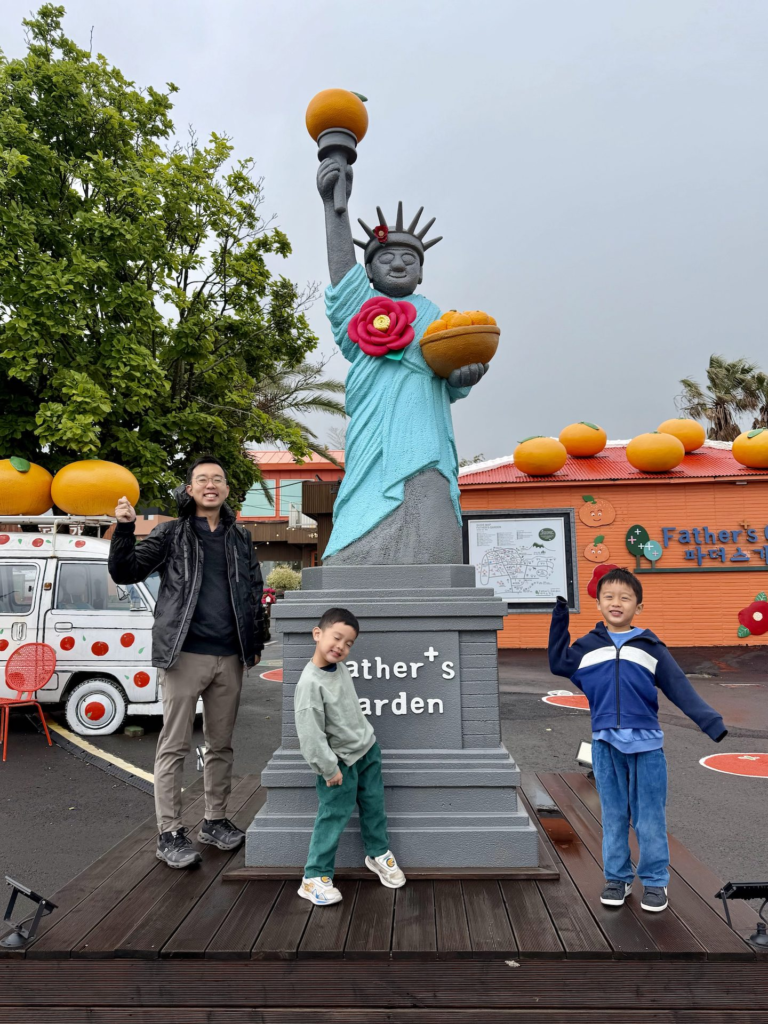
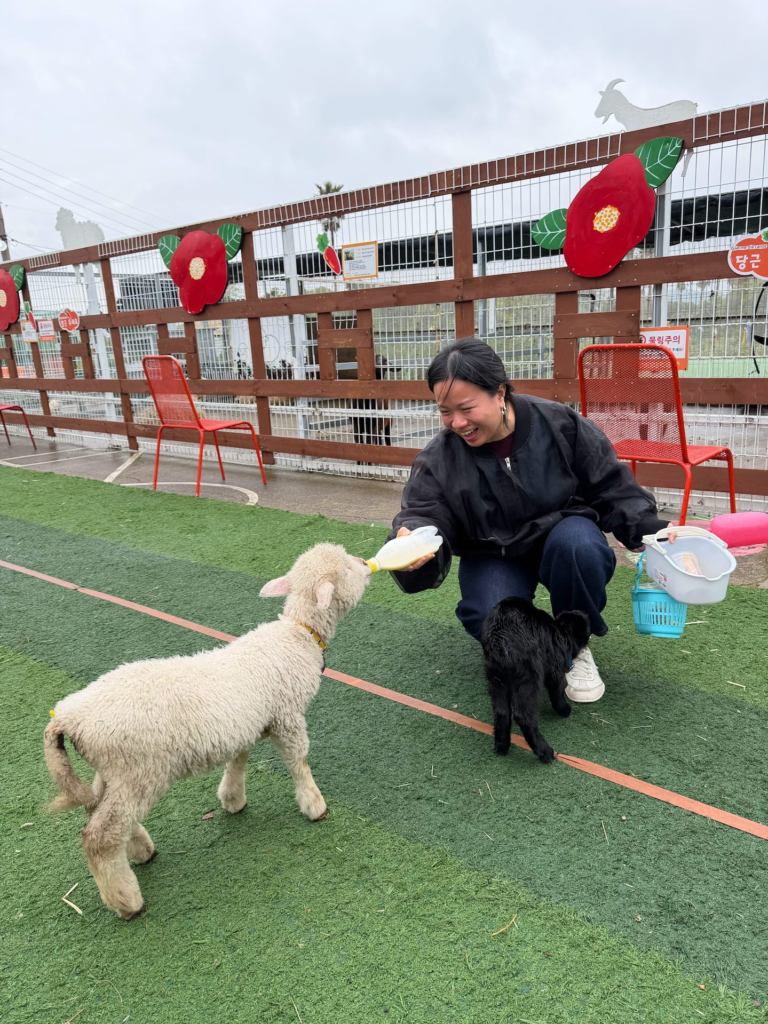
Post-lunch, we decided to stop at Father’s Garden. During the right season, you can apparently do a bunch of things like pick tangerines and ride horses. When we went, only the petting farm was available – which was sufficient for our needs. Snowy had loved Saebyeol Friends so much, all he claimed he wanted to do was to feed more animals. This met the brief – Father’s Garden is home to the cutest sheep and two black baby goats.
What’s a holiday without a last-minute food scramble? With our flight looming, we squeezed in two more stops – both worth the stress.
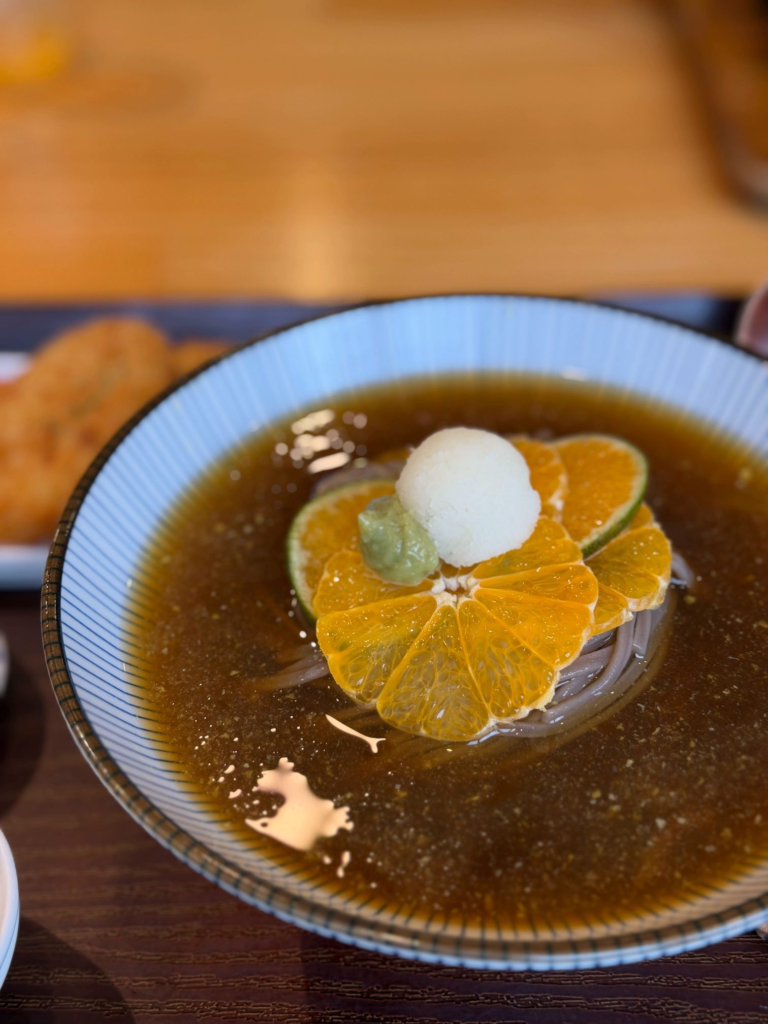
First, Dotoree Kitchen, where the signature dish is green tangerine soba, handmade by the chef. The citrus zest cuts through cleanly, and paired with freshly grated wasabi, it’s truly distinct. Go off-peak when there’s no wait, but note that each adult must order something.
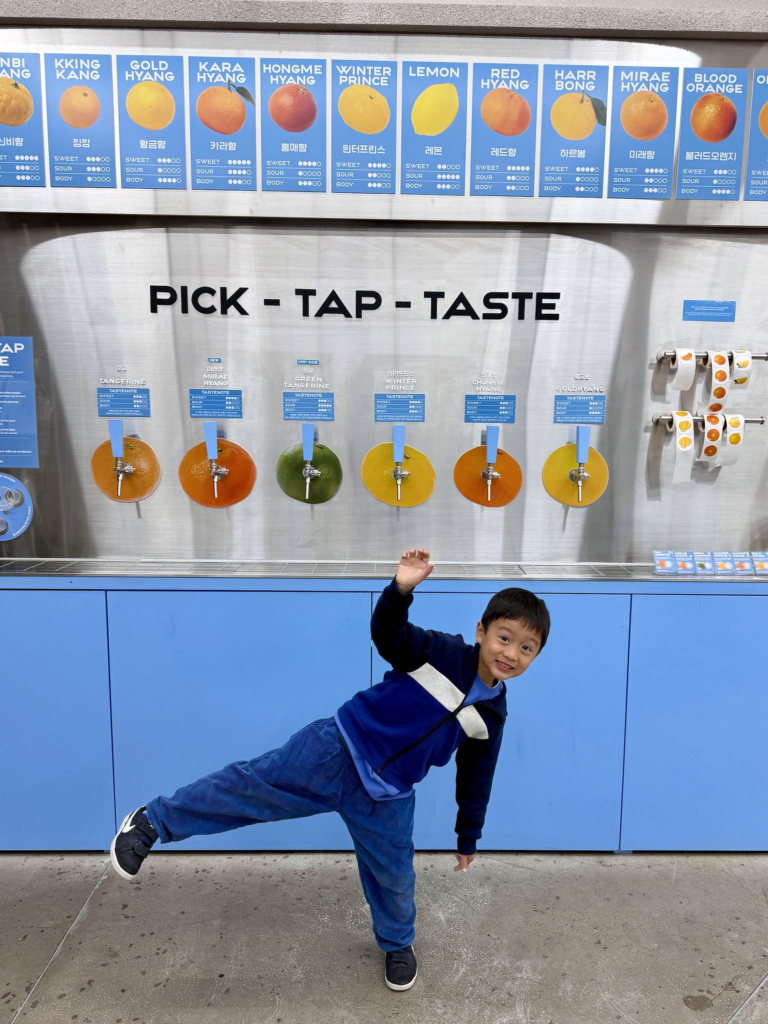
Then a quick dash to Gyulmedal, a pop-up tangerine juice bar. Jeju grows more varieties of citrus than you’d expect, and tasting them side by side mades the differences genuinely surprising. We got a flight of three. Everyone picked a different favourite.
Then we ran to the airport and made our flight. Just.
Jeju, we’ll be back.